Distributed Consensus, Clocks & Storage Engines
From unreliable networks and physical time to Raft and page-level durability
Pairs MIT 6.824, Cambridge Distributed Systems, and CMU Database Internals to show how distributed consensus protocols and local storage engines cooperate under partial failure.
Curriculum sequence
7
MIT 6.824 Distributed Systems: Introduction & MapReduce
Frames fault tolerance, replication, and scalable computation in distributed clusters.
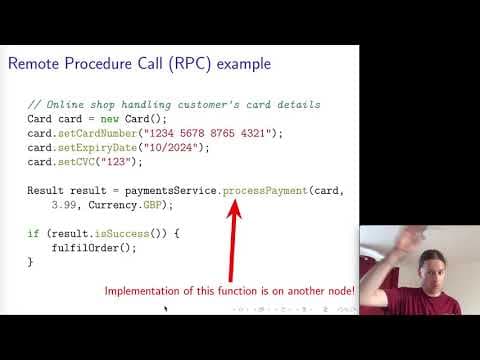

Distributed Systems 1.3: RPC (Remote Procedure Call)
Dissects RPC semantics, network partitions, and retry idempotence.
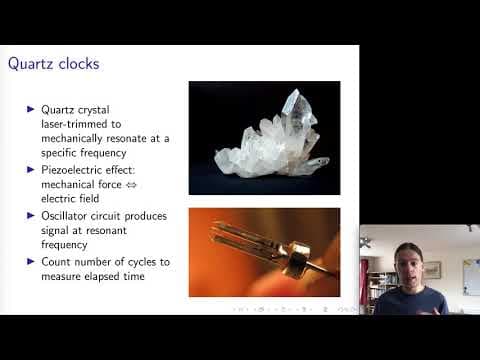
Distributed Systems 3.1: Physical time
Explains quartz drift and why wall-clock timestamps cannot order distributed events.
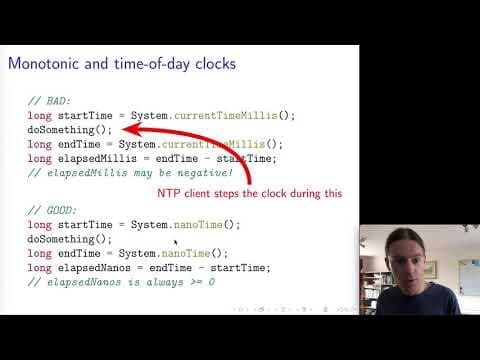
Distributed Systems 3.2: Clock synchronisation
Bounds clock skew and synchronization uncertainty across machines.
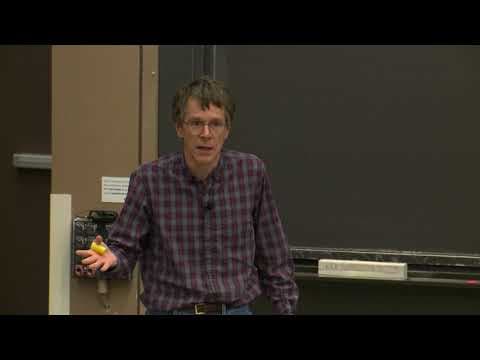
MIT 6.824 Lecture 7: Raft Log Compaction, Persistence & Linearizability (Part 2)
Walks through Raft log compaction, crash recovery, and linearizable reads.

CMU 15-445 #01: The Relational Model & Relational Algebra
Grounds state-machine storage in the relational model and algebraic query plans.
CMU 15-445 #06: Buffer Pool Managers, LRU-K Eviction & Direct I/O
Connects durability guarantees to buffer pools, eviction policies, and direct I/O.