Courses
105 multi-lecture university courses with ordered session lists.

Learning From Data
Yaser Abu-Mostafa's famed Caltech course on statistical learning theory: Hoeffding's inequality, VC dimension, bias-variance tradeoff, regularization, support vector machines, and neural nets.

Distributed Systems
Martin Kleppmann's concise Cambridge lecture sequence on physical and logical clocks, causality, broadcast protocols, Raft consensus, replication, CRDTs, and distributed transactions.

Intro to Database Systems
Inside modern relational and analytical DBMS internals: relational algebra, slotted-page storage, log-structured merge trees, columnar compression, buffer pool management, and hash/B+Tree indexes.

Undergraduate Complexity Theory
Rigorous introduction to computability and complexity theory, covering Turing machines, diagonalization, NP-completeness, space complexity, Savitch's theorem, and the polynomial hierarchy.
Advanced Database Systems
Graduate systems seminar on modern OLAP execution engines: columnar compression, Parquet/Arrow formats, vectorized SIMD execution, JIT query compilation, worst-case optimal joins, and cloud lakehouses.
Query Optimization in Modern Database Systems
Advanced systems course on relational query optimization, analyzing System R bottom-up dynamic programming, Volcano/Cascades top-down rule engines, cardinality estimation, and join ordering.
Graduate Computational Complexity Theory
Intensive PhD-level complexity theory sequence examining circuit complexity, randomized computation, interactive proofs, PCP theorem foundations, pseudorandomness, and hardness amplification.

Analysis of Boolean Functions
Research-level course developing Fourier analysis over the Boolean hypercube, hypercontractivity, noise stability, invariance principles, and applications to hardness of approximation and social choice.

Quantum Computation and Quantum Information
Mathematical development of quantum circuits, entanglement, quantum query complexity, phase estimation, Shor's factoring algorithm, quantum channels, and quantum error correction.
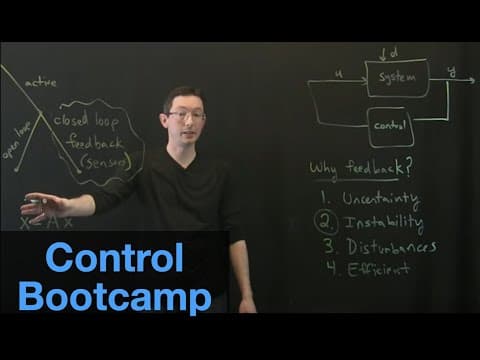

Control Bootcamp: Linear Systems & Optimal Control
State-space dynamical systems, stability eigenvalues, controllability, observability, Linear Quadratic Regulators (LQR), and Kalman filtering derived for modern control engineering.
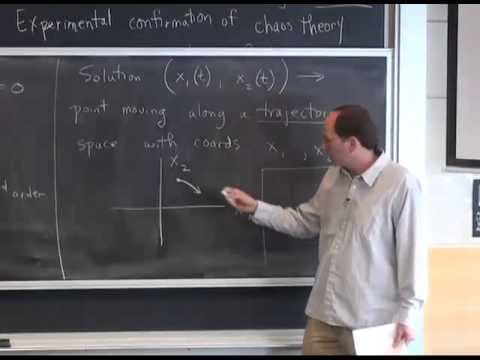

Nonlinear Dynamics and Chaos
Flows on the line and circle, saddle-node and pitchfork bifurcations, two-dimensional phase planes, limit cycles, Hopf bifurcations, Lorenz equations, strange attractors, and fractals.
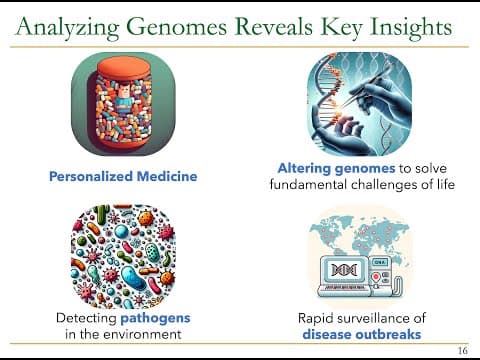

Algorithms and Architectures for Computational Genomics
Cross-disciplinary course at ETH Zürich examining high-throughput genome sequence analysis, read mapping algorithms, graph genomes, and hardware acceleration for bioinformatics.
Digital Design and Computer Architecture
From CMOS transistors, combinational logic, and sequential state machines up through instruction set architectures, pipelining, out-of-order execution, caches, DRAM controllers, and hardware accelerators.

Introduction to Computer Science
Harvard's flagship introduction to algorithmic thinking and systems programming: C pointers and memory layout, data structures, Asymptotic complexity, Python, SQL relational schemas, and web security.

Using Big Data to Solve Economic and Social Problems
Applies administrative tax, education, and census datasets to intergenerational mobility, neighborhood effects, innovation, health disparities, and tax policy.

Justice
Michael Sandel's landmark moral and political philosophy course examining Bentham, Mill, Nozick, Locke, Kant, Rawls, and Aristotle through live Socratic courtroom and policy dilemmas.
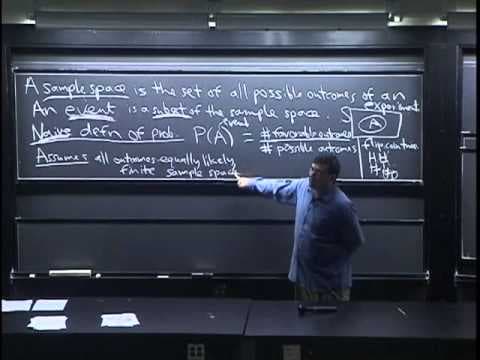
Probability
Harvard's celebrated probability sequence building story proofs, conditioning, Bayes' theorem, indicator random variables, continuous distributions, moment generating functions, and Markov chains.

Real Analysis
Dedekind cuts construction of the reals, metric space topology, compactness, Heine-Borel theorem, connected sets, Cauchy sequences, uniform continuity, and function spaces.