Opening Kirk Varnedoe on Abstract Art, 1950s 2000s, Part 1
Kirk Varnedoe on Abstract Art, 1950s 2000s, Part 1
- Length
- 1 h 2 min
- Level
- Undergraduate
- Recorded
- National Gallery of Art2021
Opening Kirk Varnedoe on Abstract Art, 1950s 2000s, Part 1
Chapter 1 of 9: Why Abstract Art
Varnedoe sets Gombrich's account of illusionism against postwar abstraction to ask what pictures of nothing do.
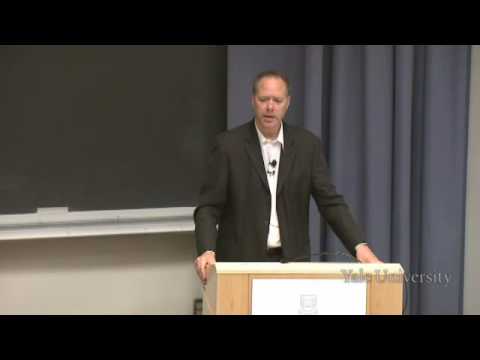
Abstract art after 1950 begins, in Kirk Varnedoe's account, with the skeptic's complaint that it offers pictures of nothing. Speaking at the National Gallery of Art, Varnedoe contrasts American abstract expressionism with the utopian, metaphysical programmes of Malevich, Mondrian and the Bauhaus. He follows the turn from Pollock to the cool irony of Jasper Johns, then through minimalism, process art, pop and the satire of the eighties. Ernst Gombrich's theory of illusionism serves as the foil for a different logic built on projection, interpretation and learned language. Varnedoe argues that abstraction expands expression by colonizing blank territory, and he assumes familiarity with Cubism, Surrealism and Duchamp.
Abstract art after 1950 begins, in Kirk Varnedoe's account, with the skeptic's complaint that it offers pictures of nothing. Speaking at the National Gallery of Art, Varnedoe contrasts American abstract expressionism with the utopian, metaphysical programmes of Malevich, Mondrian and the Bauhaus. He follows the turn from Pollock to the cool irony of Jasper Johns, then through minimalism, process art, pop and the satire of the eighties. Ernst Gombrich's theory of illusionism serves as the foil for a different logic built on projection, interpretation and learned language. Varnedoe argues that abstraction expands expression by colonizing blank territory, and he assumes familiarity with Cubism, Surrealism and Duchamp.
Art and Illusion
The Open Society and Its Enemies
Specific Objects

This lecture
Lecture 1 of 6 of Abstract Art, 1950s-2000s.
Choose a node to see how it connects to this lecture. What comes before is on the leftat the top. What comes after is on the rightat the bottom. The ring is what it teaches. People and places are above. Other lectures and books are below.
Press a chosen node again to open it.
Your comment is kept while you sign up.Sign in