The Future of Programming
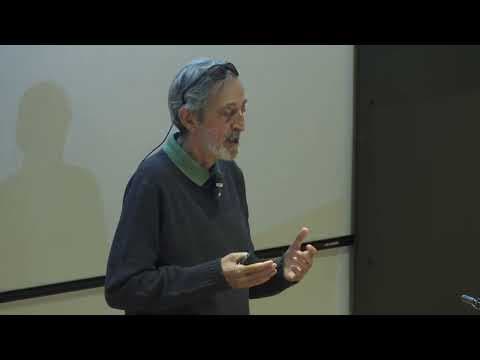
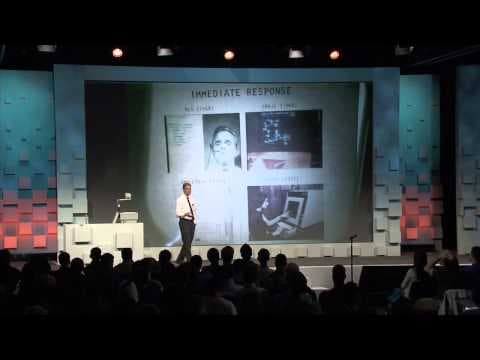
Delivered on an overhead projector in a 1973 pocket-protector shirt: a devastating historical critique of sequential text files, threads/locks, and forgotten computing paradigms.
Self-contained research seminars, departmental colloquia, and conference keynotes you can watch in a single sitting.
Delivered on an overhead projector in a 1973 pocket-protector shirt: a devastating historical critique of sequential text files, threads/locks, and forgotten computing paradigms.
Perhaps the most cited conference keynote in software engineering history: gives engineers exact vocabulary ('complecting' state, time, and identity) to diagnose accidental complexity.
Patrick Winston's enduring MIT lecture outlines heuristic rules for effective public speaking, covering structuring presentations, utilizing visual aids, informing, persuading, and managing oral examinations and job talks.
Rich Hickey presents a philosophical framework for software development, advocating for deep, uninterrupted thought and problem decomposition over reactive, task-driven approaches. This talk explores the cognitive benefits of 'hammock time' for complex system design.
Explore Richard Feynman's insightful perspective on the fundamental principles of computation, examining the interplay of hardware, software, and heuristic problem-solving approaches.
Surveys computational hardness, pseudorandomness, interactive proofs, and why resolving P vs. NP sits at the heart of mathematical knowledge itself.
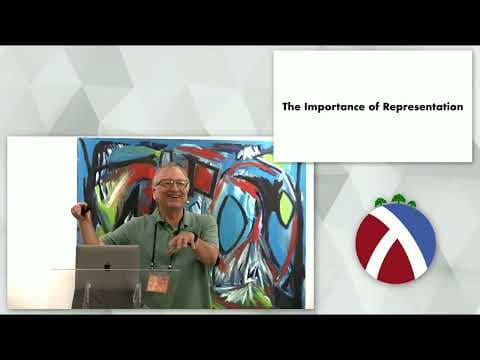
Turing Award laureate Pat Hanrahan discusses the profound influence of notation on the development and expressiveness of computing systems, drawing from his extensive experience in graphics and language design.
Professor Ronald Hutton explores the complex and often contradictory scholarly interpretations of The Morrigan, a prominent figure in Irish mythology, tracing her evolution and cultural impact.
An in-depth technical analysis detailing the intricate process by which the Windows Bootloader transitions control to the operating system kernel.
Builds quantum mechanics from two-state spin systems and Dirac bra-ket algebra rather than messy wave-equation PDEs—the foundation of Susskind's 'Theoretical Minimum'.
A core lecture from MIT's Introduction to Deep Learning, dissecting the architecture and functional principles of Recurrent Neural Networks, Transformer models, and the critical attention mechanism.
This presentation delves into the fundamental limitations of static analysis and the implications for trusting open-source software, leveraging concepts like Rice's Theorem and type system decidability.
Reframes large-scale machine learning around microeconomic mechanism design—where uncertainty quantification interacts with strategic incentives, scarcity, and multi-agent markets.
Kevin Knuth examines the physics of Unidentified Aerial Phenomena (UAP), analyzing clues related to their detection, monitoring, and potential engineering, presented at a Stanford University symposium.
Unravel the complex historical and mythological layers of Bridget, tracing her evolution from ancient Celtic goddess to medieval saint and exploring the cultural forces that shaped her enduring legacy.
Explore Jank, a native Clojure dialect built on LLVM, and its implications for C++ interop, performance, and native application development within the Clojure ecosystem.
This lecture reconstructs fundamental arithmetic operations—addition and multiplication—within a multiset theoretic framework, defining natural numbers, polynumbers, and multinumbers as nested multisets. It explores closure properties and distinct algebraic structures.
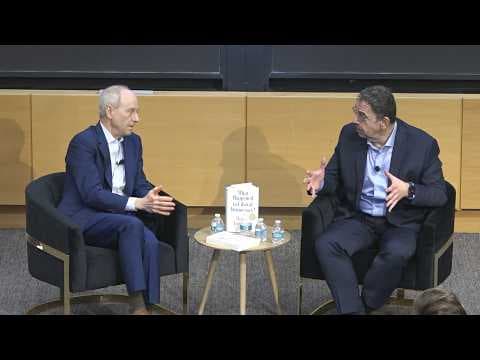
Nobel laureate Daron Acemoglu and political philosopher Michael Sandel analyze the decline of liberal democracy, examining the divergence of working-class interests, the impact of post-industrial society, and the role of globalization. They explore concepts of contributive justice and the implications of AI on democratic governance.