
Algorithms and Architectures for Computational Genomics
Prof. Onur MutluCross-disciplinary course at ETH Zürich examining high-throughput genome sequence analysis, read mapping algorithms, graph genomes, and hardware acceleration for bioinformatics.
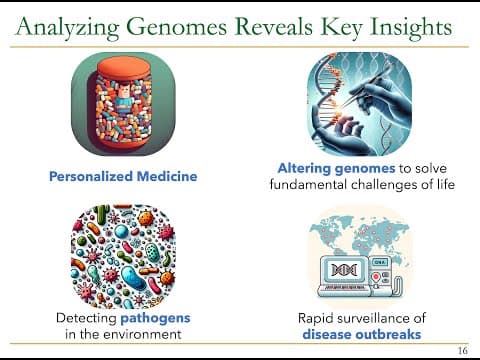
Syllabus
17Lecture 1: Course Introduction (ETH-GENOMICS)
This introductory lecture outlines the scope of "Algorithms and Architectures for Computational Genomics," setting the stage for future discussions on accelerated genome analysis and design.
Lecture 2: Introduction to Genome Analysis (ETH-GENOMICS)
This lecture provides foundational knowledge in genome analysis, introducing key concepts and methodologies essential for understanding subsequent topics in computational genomics.
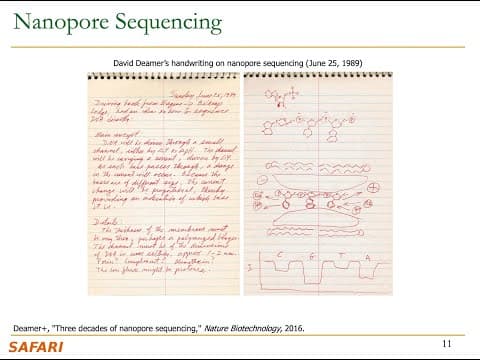
Lecture 3: From Molecules to Data: An Overview of DNA Sequencing Technologies (ETH-GENOMICS)
The lecture explores diverse DNA sequencing technologies, detailing their mechanisms from molecular biology principles to the generation of raw genomic data for computational analysis.
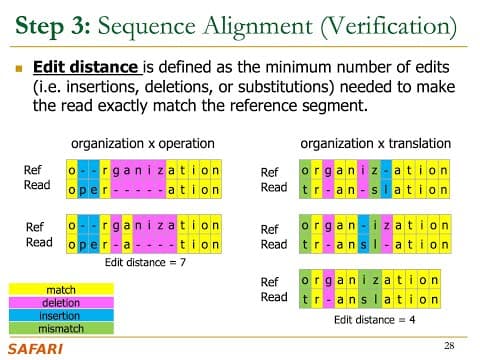
Lecture 4: Fundamentals of Sequence Search and Alignment (ETH-GENOMICS)
This lecture delves into fundamental algorithms and applications for biological sequence search and alignment, crucial for identifying genetic similarities and variations.
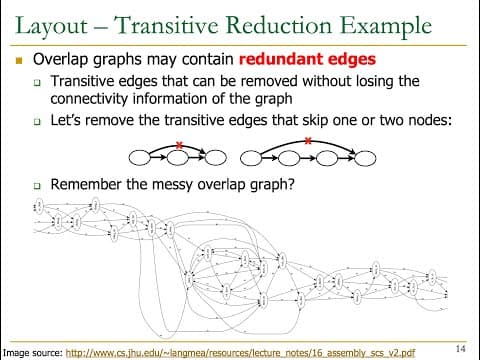
Lecture 5: Building the Blueprint of Life: Genome Assembly (ETH-GENOMICS)
This session covers the complex computational problem of genome assembly, examining algorithms that reconstruct complete genomes from fragmented sequencing reads.
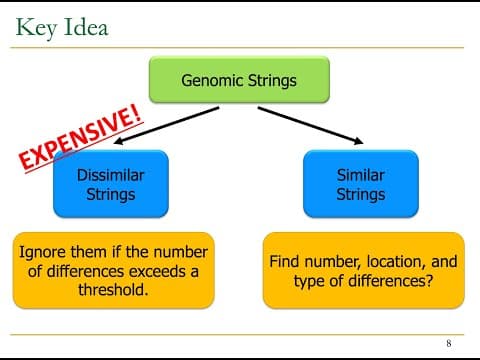
Lecture 6a: GateKeeper (ETH-GENOMICS)
This segment introduces GateKeeper, an optimized acceleration technique for genomic sequence pre-alignment filtering, enhancing throughput in DNA sequencing pipelines.
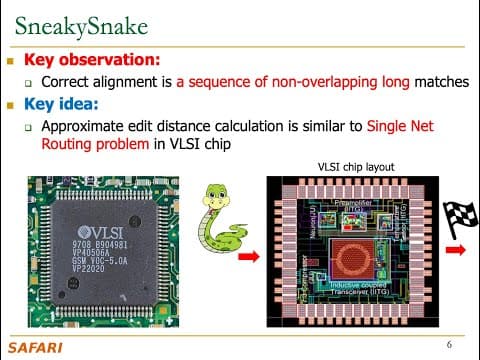
Lecture 6b: SneakySnake (ETH-GENOMICS)
The lecture examines SneakySnake, a specialized accelerator designed to optimize Smith-Waterman sequence alignment, crucial for identifying local similarities in genomic data.
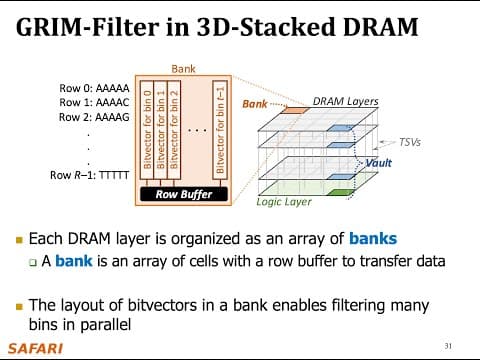
Lecture 6c: GRIM-Filter (ETH-GENOMICS)
This session introduces GRIM-Filter, an architectural solution for accelerating pre-alignment filtering in genomic analysis, improving efficiency for short read mapping.
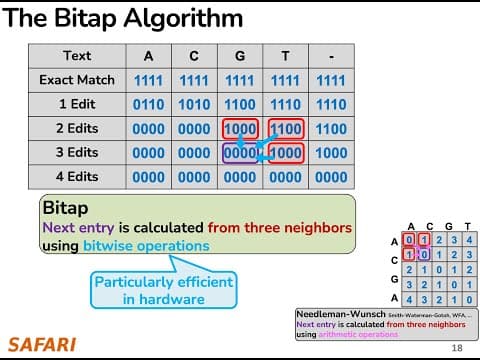
Lecture 7a: GenASM (ETH-GENOMICS)
This lecture focuses on GenASM, a specialized processing-in-memory architecture designed to accelerate genome sequence assembly algorithms, optimizing computational performance.
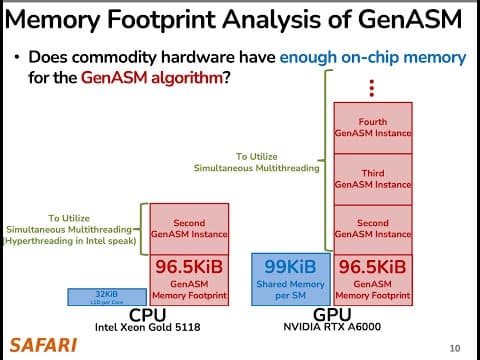
Lecture 7b: Scrooge (ETH-GENOMICS)
This segment explores Scrooge, an efficient accelerator designed for genomic sequence alignment, specifically optimized for approximate string matching operations.
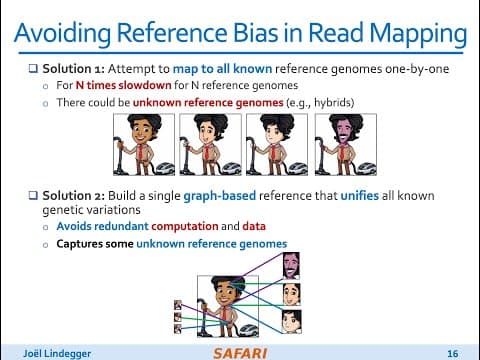
Lecture 7c: SeGraM (ETH-GENOMICS)
The lecture introduces SeGraM, a hardware accelerator designed to significantly speed up genome-wide k-mer counting, a critical step in many bioinformatics pipelines.
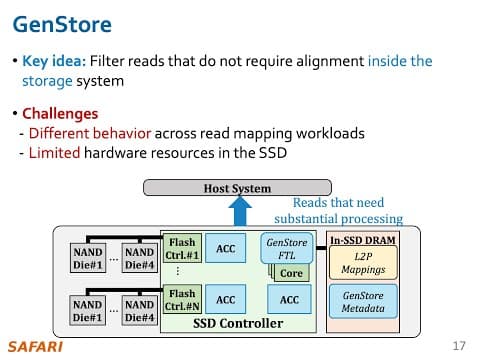
Lecture 8a: GenStore (ETH-GENOMICS)
This lecture introduces GenStore, a specialized memory architecture that improves data access patterns and efficiency for genomics workloads, enhancing overall performance.
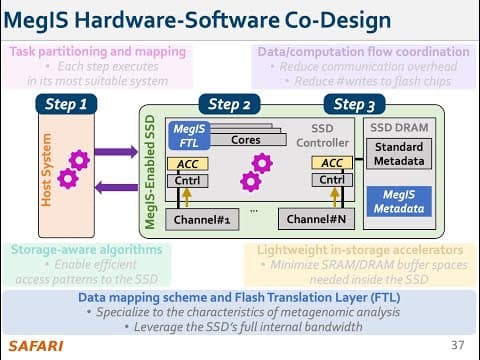
Lecture 8b: MegIS (ETH-GENOMICS)
This session examines MegIS, a novel processing-in-memory system tailored for accelerating large-scale genomic sequence alignment and search operations.
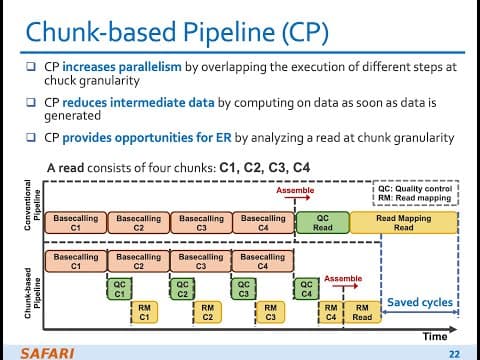
Lecture 9a: GenPIP (ETH-GENOMICS)
This lecture covers GenPIP, a specialized processing-in-memory architecture designed for efficient genomic sequence processing, particularly for read mapping applications.
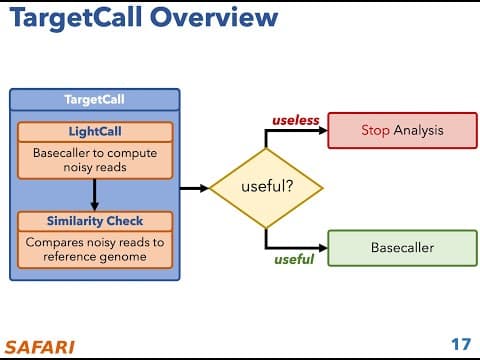
Lecture 9b: TargetCall (ETH-GENOMICS)
This session introduces TargetCall, a highly optimized algorithm and system for variant calling in targeted genomic sequencing data, enhancing diagnostic precision.
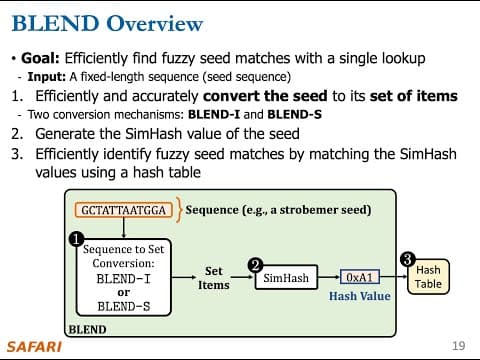
Lecture 10a: BLEND (ETH-GENOMICS)
This lecture details BLEND, a system for accelerating genome sequencing data analysis by effectively balancing compute and communication, critical for distributed processing.
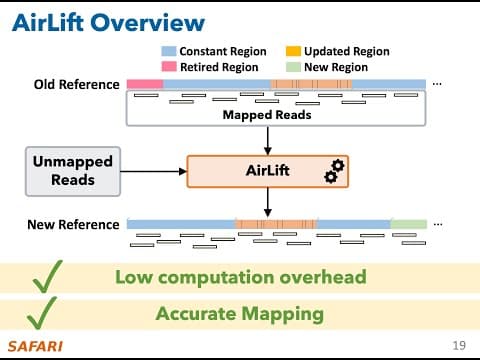
Lecture 10b: AirLift (ETH-GENOMICS)
This session explores AirLift, an efficient data transfer and processing architecture designed to optimize genomic data movement in modern computational systems.