
Human Behavioral Biology
Interdisciplinary exploration of the biological underpinnings of behavior—integrating evolutionary game theory, kin selection, molecular genetics, behavioral genetics, endocrinology, and neurobiology.
Cognitive neuroscience, human behavioral biology, genetics, molecular biology, evolutionary dynamics, and psychology.
Complete university lecture courses in biology & neuroscience.
Interdisciplinary exploration of the biological underpinnings of behavior—integrating evolutionary game theory, kin selection, molecular genetics, behavioral genetics, endocrinology, and neurobiology.
Nancy Kanwisher charts functional organization of the human cortex through lesion neuropsychology, fMRI, diffusion tractography, visual object recognition, navigation, number, language, and theory of mind.
Grounds organic chemistry in quantum mechanics and experimental history—from force laws, wavefunctions, and X-ray diffraction to stereochemistry, conformational strain, and reaction mechanisms.
Paul Bloom's comprehensive Yale survey of mind and behavior: neural foundations, perception, language acquisition, cognitive development, emotion, morality, and social psychology.
Natural selection, neutral evolution, phylogenetic reconstruction, speciation, life-history optimization, evolutionary medicine, coevolution, behavioral ecology, and ecosystem dynamics.
Atomic orbitals, molecular orbital theory, VSEPR geometry, thermodynamics, chemical equilibrium, acid-base titration, electrochemistry, transition metals, and reaction kinetics.
Two complementary bio & neuro talks paired around a central intellectual tension.
From proton gradients across primordial hydrothermal membranes to the bioelectric networks cells use today to coordinate anatomical shape.
Self-contained lectures, Nobel addresses, and research colloquia you can watch in one sitting.
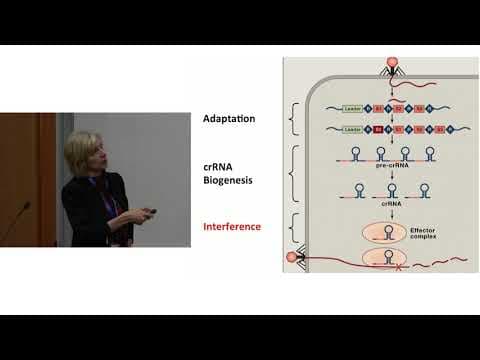
Jennifer Doudna, Nobel laureate and co-discoverer of CRISPR-Cas9, provides a foundational overview of CRISPR biology, tracing its development from fundamental microbial defense mechanisms to a revolutionary genome engineering technology.
The fourteenth installment of the 'Purposes of College Education' series, exploring the evolution and concepts of democracy from ancient origins to modern interpretations.
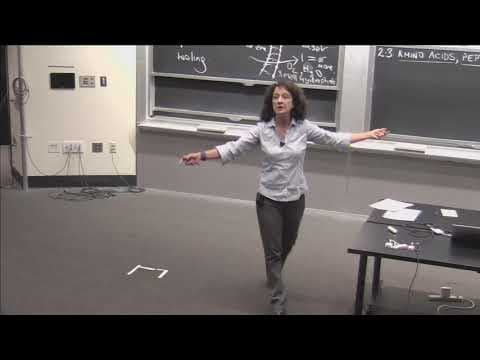
An MIT OpenCourseWare lecture elucidates the chemical and biological mechanisms of radiation damage, from molecular interactions to organismal effects, culminating in a critical analysis of common nuclear misinformation.
Daron Acemoglu presents his Nobel Prize lecture, examining the intricate co-evolution of institutions, technological advancements, and long-run economic prosperity. The discussion delves into how institutional frameworks shape the adoption and impact of new technologies.
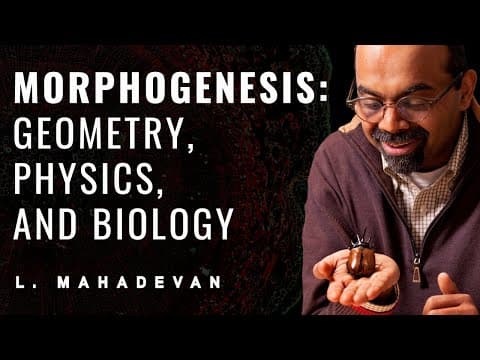
L. Mahadevan presents a synthesis of mathematical models, physical principles, and biological observations to explain the emergence of form in living systems, addressing how fundamental interactions lead to complex biological structures.
Jonathan Weissman details advanced applications of catalytically inactive Cas9 (dCas9) as a versatile tool for precise gene regulation and epigenetic engineering, beyond its traditional role in genome editing.
Auditory/visual transduction, psychophysical thresholds, and hardware-accelerated DNA analysis
MIT · ETH Zürich
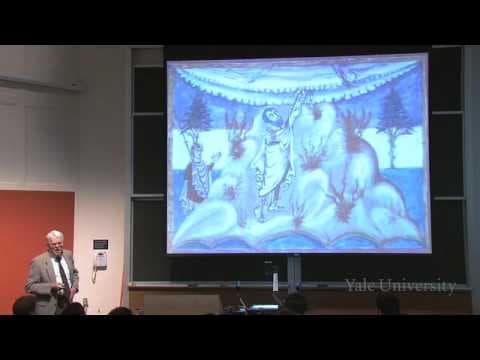
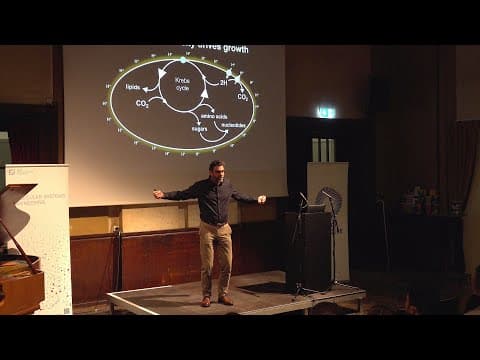
Quantum orbitals, proton gradients, bioelectric patterning, and paleogenomics
MIT · Yale University · Royal Institution +2
Protein chemistry, CRISPR/mRNA engineering, natural selection, and fMRI neuroscience
MIT · UC Berkeley · Karolinska Institutet +1