
Public Finance and Public Policy
Microeconomic analysis of government fiscal policy, examining market failures, externalities, public goods, social insurance design, optimal taxation, and empirical policy evaluation.
Syllabus
20Why Study Public Finance?
This introductory lecture explores the fundamental justifications for government intervention in the economy, establishing a framework for analyzing public finance issues. It addresses the 'when,' 'how,' and 'effect' of public policy interventions.
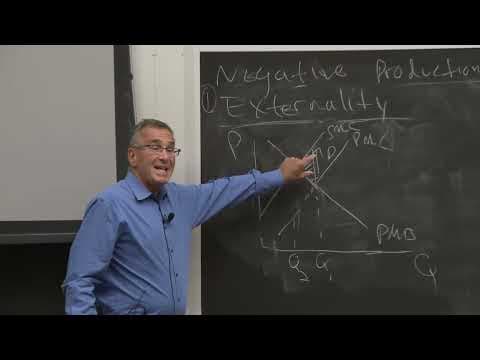
Externalities in Theory
This lecture delineates the theoretical foundations of externalities, examining their impact on public goods, social insurance, and taxation. It provides a conceptual basis for understanding market failures arising from external effects.
Externalities in Theory & Practice
Continuing the discussion on externalities, this lecture applies theoretical concepts to real-world issues such as climate change and forest fires. It illustrates how economic models inform policy responses to environmental challenges.
Externalities in Practice II
This lecture extends the analysis of health externalities, specifically focusing on the economic and social consequences of smoking. It explores policy interventions designed to mitigate the negative external effects of health behaviors.
Public Goods Theory, Optimality, and Pricing
This lecture delves into the theory of public goods, defining their characteristics and exploring conditions for optimal provision. It also considers mechanisms and challenges related to pricing and financing non-excludable and non-rivalrous goods.
Cost/Benefit Analysis
This lecture systematically introduces cost-benefit analysis as a tool for evaluating public projects and policies. It outlines the methodologies for quantifying project benefits and costs to inform governmental decision-making.
Political Economy
This lecture examines the promises and pitfalls inherent in representative democracy, applying political economy frameworks to understand how collective decisions are made. It considers the interplay between economic incentives and political processes.
Local Public Goods and Fiscal Federalism
This lecture examines the theoretical underpinnings of fiscal federalism, analyzing how different levels of government manage public goods provision and intergovernmental financial relationships. It applies public goods theory to practical policy frameworks.
Public Provision of Private Goods: Education
This lecture investigates the economic rationale and implications of government funding for education, a private good with significant external benefits. It analyzes various policy approaches to public education provision.
Social Insurance Theory
This lecture introduces the theoretical underpinnings of social insurance programs, examining their role in addressing inequality and providing government transfers. It analyzes the economic motivations and effects of these policies.
Social Security
This lecture provides an in-depth analysis of Social Security, the largest social insurance program, covering its structure, financing, and economic impact. It discusses the challenges and reforms associated with this intergenerational transfer system.
Other Social Insurance Programs
Professor Gruber analyzes the economic frameworks and policy implications of various social insurance mechanisms, specifically examining unemployment insurance, disability insurance, and workers' compensation.
Health Care I
This lecture initiates a multi-part discussion on health care, identifying it as a major component of federal government expenditure. It analyzes the fundamental economic characteristics and market failures within the healthcare sector.
Health Care II
Continuing the examination of health care, this lecture delves deeper into various aspects of healthcare financing and delivery. It explores different models of healthcare systems and their economic implications.
Health Care III, Redistribution
This lecture concludes the health care discussion by focusing on Medicare, analyzing its role in healthcare provision and its redistributive effects. It evaluates the challenges and policy options for this significant program.
Redistribution and Welfare Policy
This lecture addresses the economic foundations of redistribution and welfare policy, examining government transfer programs designed to mitigate inequality. It discusses the various forms and impacts of social welfare initiatives.
Redistribution and Welfare, Taxation Overview
This lecture continues the exploration of redistribution policies, specifically examining childcare subsidies and welfare programs. It also introduces an overview of taxation principles as they relate to these redistributive efforts.
Overview of Taxation and Tax Base, Tax Incidence
Professor Gruber introduces fundamental concepts in tax theory, examining the definition of the tax base, various forms of taxation, and the economic principles governing tax incidence and burden distribution.
Tax Incidence and Tax Efficiency
Building on tax incidence, this lecture introduces the concept of tax efficiency, analyzing how taxes distort economic behavior and create deadweight loss. It examines strategies for designing tax systems that minimize inefficiency.
Taxation and Labor Supply
This lecture investigates the critical relationship between taxation and labor supply, analyzing how different tax structures influence individuals' work incentives and labor force participation. It explores the income and substitution effects of taxation.