
Introduction to Linguistics
Norvin RichardsMorphology, phonetics, phonology, generative syntax, compositional semantics, pragmatics, historical language change, and universal structural constraints across human languages.
Syllabus
22Morphology, Part 1
This lecture provides a foundational introduction to morphology, analyzing the internal structure of words and the principles governing morpheme combination. It distinguishes between inflectional and derivational morphology, presenting core concepts in linguistic analysis.
Morphology, Part 2
This lecture continues the analysis of linguistic morphology, detailing the structural forms morphemes adopt and the combinatorial rules governing their assembly into complex words. Key concepts in derivational and inflectional morphology are explored.
Morphology, Part 3
This lecture continues the analysis of morphological principles, examining how systems of word formation and inflection vary across different natural languages, highlighting cross-linguistic distinctions in morphological realization.
Phonetics, Part 1
This lecture introduces fundamental concepts and terminology in phonetics, providing a systematic framework for describing the production and acoustic properties of human speech sounds.
Phonetics, Part 2
This lecture continues the introduction to phonetics, focusing on the articulatory and acoustic properties of vowels, including formants and the International Phonetic Alphabet (IPA) representations.
Phonology, Part 1
This lecture introduces the foundational principles of phonology, examining the systematic rules governing the pronunciation and realization of morphemes across different natural languages.
Phonology, Part 2
This lecture elaborates on phonological principles, examining specific examples of phonotactic constraints and sound patterns in Japanese, English, and Arabic to illustrate cross-linguistic variations in phoneme distribution.
Phonology, Part 3
This lecture delves into language-specific rules governing accent placement and other phonological features, analyzing their systematic variations across different linguistic systems.
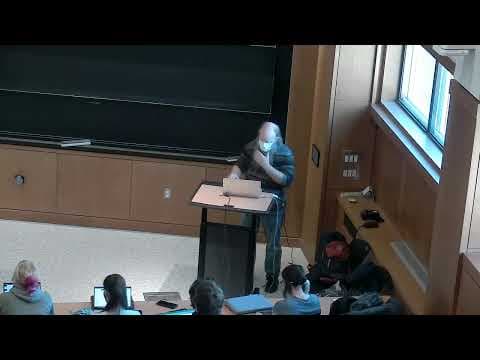
Syntax, Part 1
The session introduces the foundational principles of syntax, exploring the fundamental mechanisms by which individual words combine to construct grammatically coherent sentences.
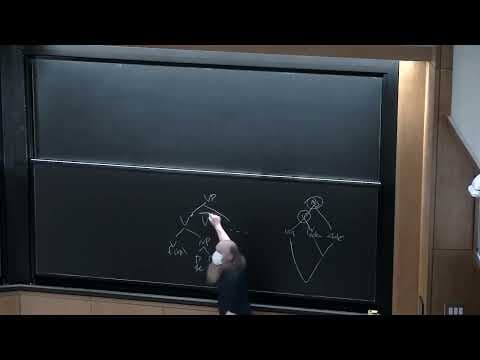
Syntax, Part 2
This lecture explicates the construction and interpretation of syntactic trees, demonstrating their utility in visually mapping the hierarchical structure of various sentence types.
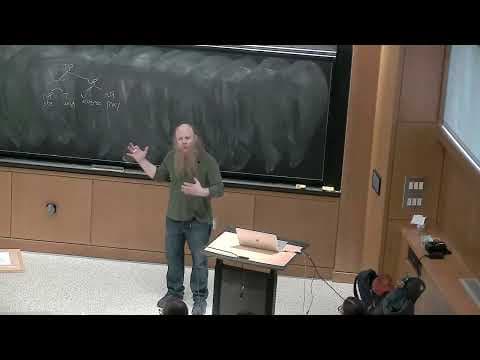
Syntax, Part 3
The session focuses on the intricate relations between verbs and other constituents within a sentence, analyzing how argument structure dictates grammatical dependencies.
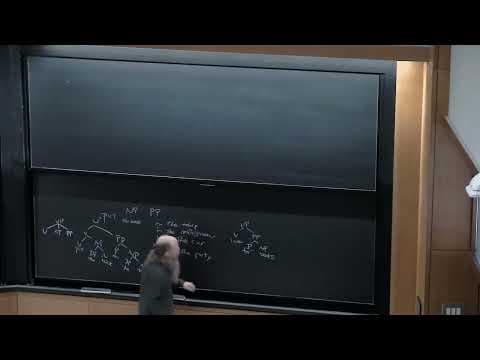
Syntax, Part 4
This lecture explores advanced applications of syntactic trees for comprehensive grammatical analysis, detailing techniques for dissecting complex sentence structures.
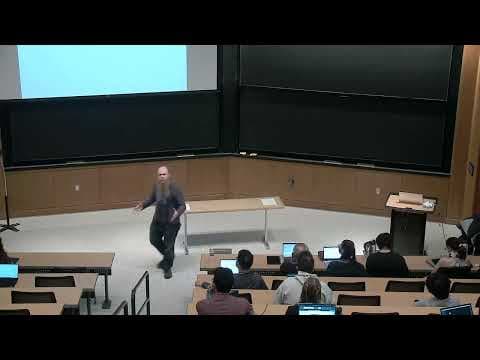
Syntax, Part 5
The lecture examines the acquisition of wh-movement and the Extended Projection Principle, discussing their roles in child language development and theoretical syntax.
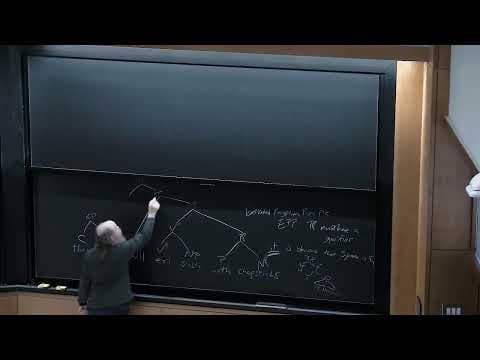
Syntax, Part 6
This session investigates the head-complement relations across diverse languages, analyzing how syntactic heads govern their complements and cross-linguistic variations.
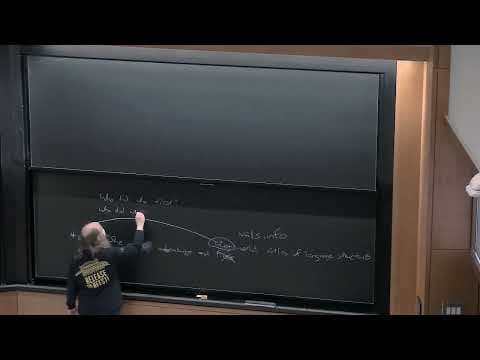
Syntax, Part 7, and Semantics, Part 1
The lecture concludes the syntax module and transitions to an examination of semantics, introducing fundamental concepts in meaning and interpretation within linguistics.
Semantics, Part 2
This lecture explores various types of ambiguity related to quantifiers, detailing their impact on semantic interpretation and logical representation in natural language.
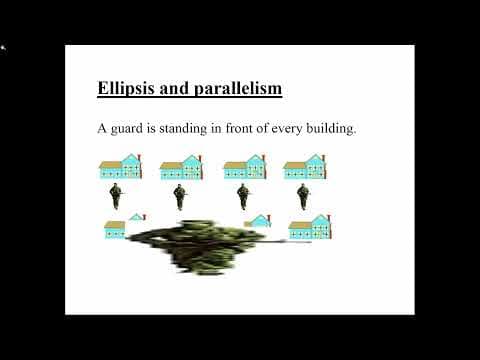
Semantics, Part 3
The session focuses on the semantics of quantifiers, with a particular emphasis on negative polarity items and their distribution and licensing conditions.
Semantics, Part 4
This lecture explicates the semantics of pronouns, anaphora, and binding theory, analyzing how referential dependencies are established and constrained within sentences.
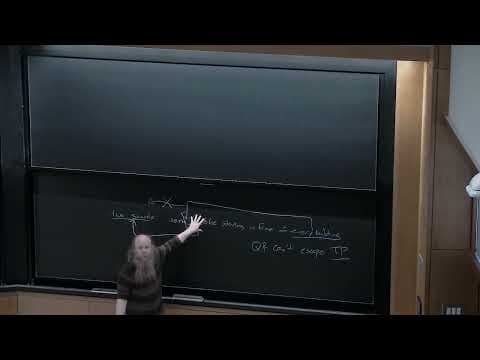
Semantics, Part 5
The session examines semantic interpretations of sentences, with a specific focus on phenomena involving ellipsis and the reconstruction of missing syntactic material.
Dialects
This lecture discusses divergent strategies for expressing negation across languages and elucidates key grammatical constraints characteristic of African American English.
Historical Linguistics
The lecture explains how mechanisms like semantic drift, recuttings, and sound changes contribute to language evolution and the eventual divergence into distinct languages.
Endangered Languages
This session details the revitalization efforts for the Wampanoag language and explores methods of reconstructing extinct language grammars through historical documentation.