
Corporate Valuation
Aswath DamodaranIntrinsic discounted cash flow valuation, equity risk premiums, cost of capital, growth estimation, terminal value, relative multiples, and valuing private and distressed firms.
Syllabus
22
Class Logistics and Structure
This introductory session outlines the course structure and philosophical underpinnings of valuation, distinguishing it from pricing and framing it as a crucial bridge between qualitative narratives and quantitative financial data across diverse business contexts.

The Bermuda Triangle of Valuation
This lecture introduces the three fundamental valuation approaches: discounted cash flow for intrinsic value, relative valuation based on comparable assets, and option pricing. It outlines the prerequisites for effective DCF valuation, including a long time horizon.
Valuation Approaches (Continued) and First Steps on Intrinsic Value
This session continues the discussion on valuation approaches, touching upon pricing and real options, then delves into intrinsic value, emphasizing the importance of consistency in discounted cash flow valuation regarding equity vs. firm cash flows.
The DCF Big Picture and First Steps on Risk-Free Rates
This lecture provides an overarching perspective on discounted cash flow (DCF) models, highlighting the interconnectedness and internal consistency required among cash flows, growth rates, and discount rates. It introduces the assessment of risk-free rates, including in currencies with government default risk.
Finishing up Riskfree Rates and Moving on to Risk Premiums
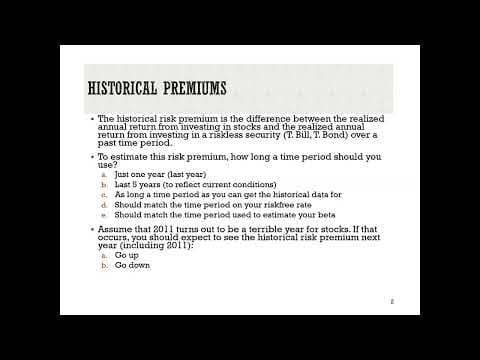
Professor Damodaran concludes the discussion on risk-free rates and delves into the estimation and limitations of equity risk premiums, including approaches for countries with limited historical data.
Implied Equity Risk Premiums
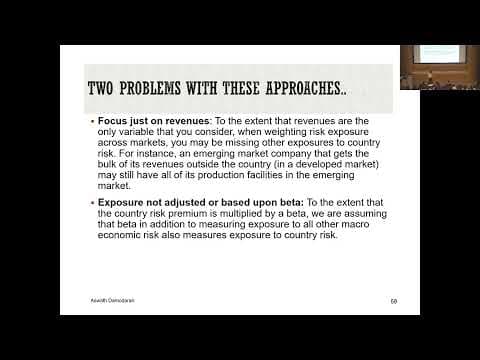
This lecture delves into the dynamics of implied equity risk premiums (ERP), analyzing factors that cause them to fluctuate and comparing ERPs across markets, including bonds and real estate. It stresses alignment with current implied premiums for valuation.
Betas, Relative Risk and First Steps on Cost of Debt
This session critiques regression betas for their backward-looking and noisy nature, advocating for bottom-up betas by carefully defining comparable firms. It also initiates the discussion on estimating the cost of debt.
Cost of Capital Closure + First Steps on Cash Flows
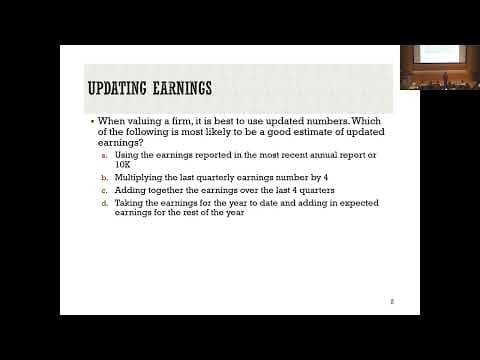
This session addresses the computation of the cost of debt, debt ratios, and the treatment of hybrid securities within a corporate valuation framework. It then introduces free cash flow analysis, distinguishing various types of cash flows and their implications for firm valuation.
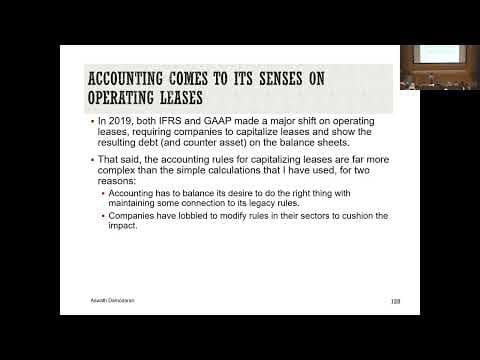
Tax Rates, Cap Ex and Working Capital
This session examines the capitalization of lease commitments and R&D expenses, their impact on valuation, and key issues in computing after-tax cash flows, including appropriate tax rates for money-losing companies and forensic accounting considerations.

FCFE Closure and First Steps on Growth
This lecture completes the analysis of Free Cash Flow to Equity (FCFE) across the corporate life cycle and introduces three key approaches to estimating growth: historical growth, analyst forecasts, and sustainable growth, emphasizing their integrated application.
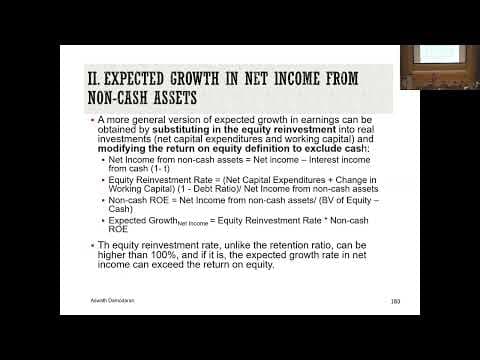
Closure on Growth and First Steps on Terminal Value
This session concludes the discussion on sustainable growth, examining growth in net and operating income using reinvestment rates and accounting returns. It then introduces terminal value, highlighting the limitations of using a terminal multiple for intrinsic valuation.
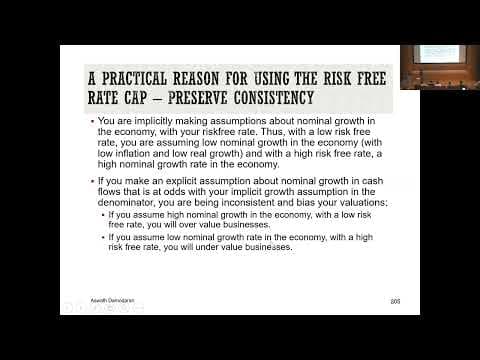
The Terminal Value
This lecture scrutinizes the terminal value in DCF models, discussing constraints such as the risk-free rate as a proxy for nominal economic growth and the role of steady-state return on capital in determining long-term value.
Loose Ends in Valuation
This session explores customizing discounted cash flow models, distinguishing equity versus firm valuation, and incorporating complex elements such as cash holdings, cross holdings, and other assets without double-counting, alongside growth pattern choices.

Last Loose Ends + First Steps on Storytelling
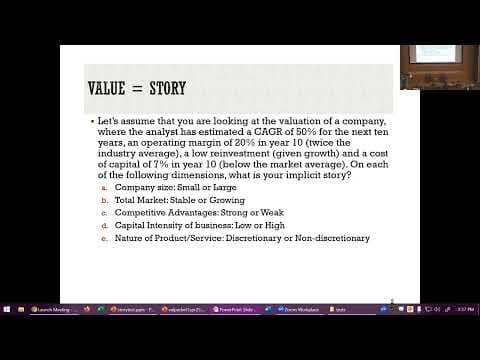
This lecture addresses the negligent treatment of stock-based compensation in valuation and introduces a five-step process for connecting qualitative business narratives to quantitative financial figures, bridging storytelling with numerical analysis.
More Storytelling and First Company Valuations
This session extends the discussion on narrative valuation, emphasizing the importance of feedback loops in refining business stories and identifying pitfalls like runaway stories and the big market delusion. It applies these concepts to initial company valuations.
Valuing the market and companies across the life cycle
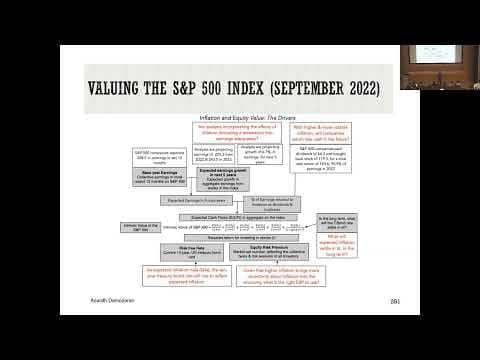
We started this class with a model to value an index (the S&P 500). If you are interested in an updated version, where you can change the numbers try this link:.

Valuing Declining, Emerging Market and Financial Service companies
Professor Damodaran examines the distinct challenges in valuing declining and emerging market companies, then critically assesses traditional dividend discount models for financial service firms. He proposes an alternative Free Cash Flow to Equity (FCFE) approach for banks, anchored to regulatory capital investment.
Intrinsic Value Closure and Pricing Beginnings
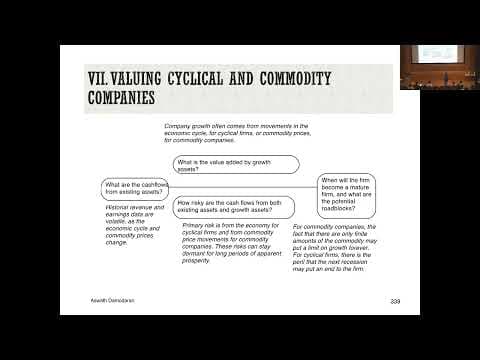
Professor Damodaran explicates the mechanisms of intrinsic value convergence, the role of Monte Carlo simulations in commodity valuation, and introduces relative valuation frameworks, including the consistent definition and estimation of pricing multiples.
Pricing Continued
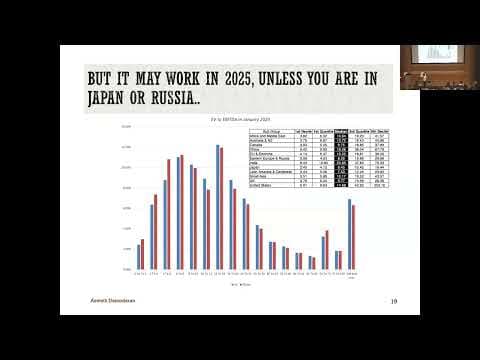
Professor Damodaran dissects the analytical underpinnings of equity pricing multiples, including PEG, PBV, and EV/EBITDA. The session critically examines the process of identifying fundamental mismatches between valuation metrics and underlying company performance as a basis for investment screening.
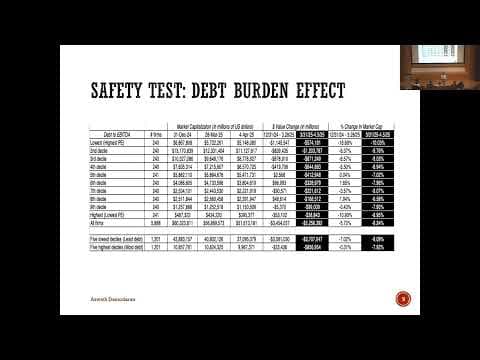
Tariff Talk
In this quiz-shortened class, we talked almost entirely about the tariff announcements last week (April 2, 2025) and the market reaction to those announcements.
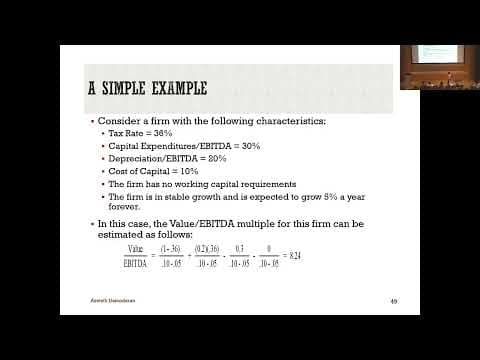
Pricing Analytics and Peer Groups
During thisclass, we started by continuing to examine how to deconstruct multiples to determine what drives each multiple, using an intrinsic value model as a starting point and employing algebra for two reasons:.
Pricing Closure and Asset-based Valuation/Pricing
Professor Damodaran concludes the discussion on pricing using market regression before examining asset-based valuation methods, including liquidation and accounting valuation, and their application to private companies. The session covers explicit and implicit valuation impacts stemming from market illiquidity.