
The Making of Modern Ukraine
Timothy Snyder explores a millennium of European state formation, empire, nationhood, language politics, and historical methodology through the history of Ukraine.
Syllabus
21Ukrainian Questions Posed by Russian Invasion
Class 1 is an introduction to the course and an exploration of questions raised by the Russian invasion of Ukraine.
The Genesis of Nations
Timothy Snyder is the Richard C. Levin Professor of History at Yale University and a permanent fellow at the Institute for Human Sciences in Vienna. He speaks five and reads ten European languages.
Geography and Ancient History
In Class 3, Timothy Snyder, recently back from a visit to Ukraine, explores the geography and ancient history of the region.
Before Europe
Do you speak the language or does the language speak you? In Class 4 Professor Timothy Snyder maps out the landscape 'Before Europe.'.
Vikings, Slavers, Lawgivers: The Kyiv State
In Class 5, Professor Snyder describes the foundations of the Kyiv state.
The Grand Duchy of Lithuania
Class 6 continues the foundations of the Kyiv state at a time when Lithuania was much larger than most people think.
Rise of Muscovite Power
Class 7 continues the exploration of post-Viking states toward the rise of Muscovite power.
Early Jews of Modern Ukraine
In Class 8, guest lecturer Glenn Dynner, Professor of Judaic Studies and Director of the Bennett Center at Fairfield University, explores the early Jews of modern Ukraine.
Polish Power and Cossack Revolution
This lecture investigates the profound impact of the Polish state on early modern Ukrainian development, particularly analyzing the socio-political dynamics of Polish power and the emergence of Cossack revolutionary movements.
Global Empires
This session explores the intricate ways various global empires, including the Russian and Habsburg, shaped the evolving historical trajectory and societal structures of Ukraine.
Ottoman Retreat, Russian Power, Ukrainian Populism
This lecture examines the complex interplay of Ottoman decline, the rise of Russian influence, and the burgeoning of Ukrainian populism during the pivotal 18th century.
Republics and Revolutions
This lecture details the confluence of revolutionary forces and the eventual dissolution of empires that profoundly reshaped the political landscape of Eastern Europe.
Interwar Poland’s Ukrainians
This session delves into the complex experiences of Ukrainians living within Poland during the interwar period, exploring national identity, state policies, and cross-border interactions.
Ukrainization, Famine, Terror: 1920s-1930s
This lecture critically examines the Soviet policies of Ukrainization, the devastating Holodomor famine, and the accompanying political terror that marked the 1920s and 1930s in Ukraine.
Habsburg Curiosity
This session critically analyzes the historical veracity of the 'Privilegium Maius' and traces the extensive influence of the Habsburg dynasty on European and Ukrainian development.
Colonization, Extermination, Ethnic Cleansing
This lecture confronts the horrific policies of colonization, extermination, and ethnic cleansing implemented in Ukraine during the devastating 1940s, analyzing their systematic nature and impact.
Reforms, Recentralization, Dissidence: 1950s-1970s
This session examines the post-Stalinist era in Ukraine, focusing on Khrushchev's reforms, subsequent Soviet recentralization efforts, and the emergence of dissidence from the 1950s to 1970s.
Before and After the End of History
This lecture analyzes the ideological shifts from Marxism and dialectics to consumerism and nationalism during the transition period from Khrushchev's rule to Brezhnev's era, in the context of Ukraine.
Oligarchies in Russia and Ukraine
This session explores the formation and influence of oligarchic systems in both post-Soviet Russia and Ukraine, drawing connections to the enduring historical impact of Polish-Lithuanian legacies.
Maidan and Self-Understanding
Guest lecturer Marci Shore examines the profound socio-political implications of the Maidan protests and their transformative role in shaping Ukrainian national self-understanding and identity.
Comparative Russian Imperialism
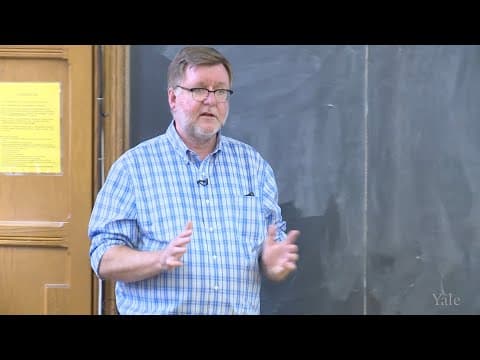
Guest lecturer Arne Westad provides a comparative analysis of Russian imperialism, contextualizing its characteristics and trajectory against other major empires in recent global history.