Freshman Organic Chemistry I
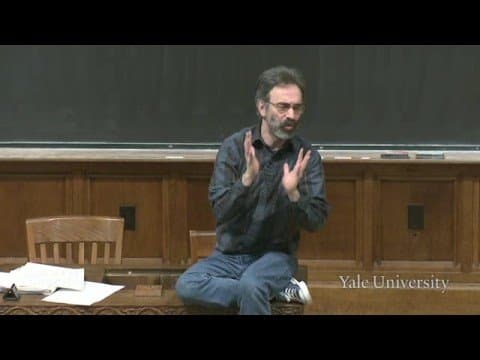
Grounds organic chemistry in quantum mechanics and experimental history—from force laws, wavefunctions, and X-ray diffraction to stereochemistry, conformational strain, and reaction mechanisms.
Faculty & visiting speakers
Complete university courses recorded at Yale University.
Grounds organic chemistry in quantum mechanics and experimental history—from force laws, wavefunctions, and X-ray diffraction to stereochemistry, conformational strain, and reaction mechanisms.
Donald Kagan traces Greek civilization from the Bronze Age collapse and rise of the polis through Athenian democracy, the Persian Wars, and Thucydides' Peloponnesian War.
Rigorous undergraduate introduction to strategic reasoning: dominance, Nash equilibrium, backward induction, subgame perfection, evolutionary games, asymmetric information, and auctions.
Natural selection, neutral evolution, phylogenetic reconstruction, speciation, life-history optimization, evolutionary medicine, coevolution, behavioral ecology, and ecosystem dynamics.
Joanne Freeman reconstructs the political, social, and ideological upheaval of British North America from imperial crisis and street protest through independence, war, and constitutional founding.
Pulitzer Prize historian David Blight examines the causes, military turning points, emancipation, constitutional remaking, and contested memory of the American Civil War and Reconstruction.
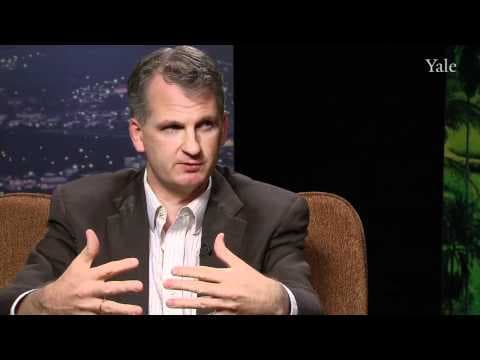
Timothy Snyder explores a millennium of European state formation, empire, nationhood, language politics, and historical methodology through the history of Ukraine.
Philosophical and jurisprudential inquiry into constitutional interpretation beyond explicit text, examining precedent, foundational norms, natural rights traditions, and democratic legitimacy.
Systematic historical and textual examination of the United States Constitution, tracing its eighteenth-century ratification, structural separation of powers, and Reconstruction amendments.
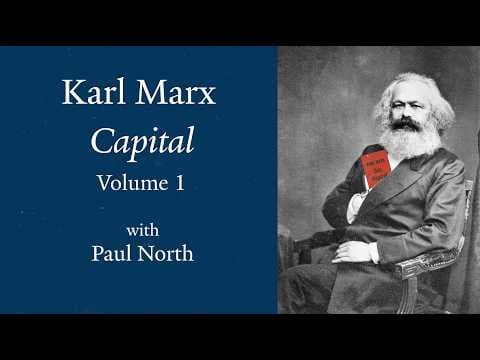
Close textual and theoretical seminar on Karl Marx's Capital, Volume 1, analyzing the commodity form, theories of value and surplus labor, primitive accumulation, and classical political economy.
Pairs Plato, Aristotle, Epictetus, Hobbes, Kant, and Mill with contemporary cognitive science, behavioral economics, and moral psychology on flourishing, habit, and justice.
Close philosophical reading of foundational political texts on regime, sovereignty, liberty, and citizenship: Plato's Republic, Aristotle's Politics, Machiavelli, Hobbes, Locke, Rousseau, and Tocqueville.
Paul Bloom's comprehensive Yale survey of mind and behavior: neural foundations, perception, language acquisition, cognitive development, emotion, morality, and social psychology.
Historical, literary, and archaeological study of the Hebrew Bible in its Ancient Near Eastern context: Mesopotamian myth, covenant law, prophecy, wisdom literature, and canon formation.
Exoplanet detection, orbital mechanics, stellar collapse and black holes, general relativistic tests, Hubble expansion, dark matter, and accelerating cosmic expansion.
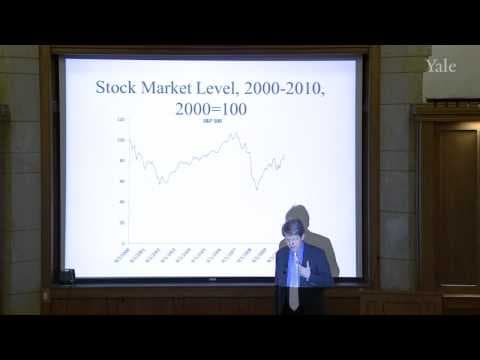
Nobel laureate Robert Shiller examines the theory, history, and behavioral foundations of risk management, portfolio diversification, efficient markets, real estate, banking, and regulation.
Surveys modern literary theory from Russian formalism, hermeneutics, semiotics, structuralism, and deconstruction to psychoanalysis, New Historicism, and postcolonial criticism.
Absolutism, the Enlightenment, the French Revolution, industrialization, urban life, nationalism, imperial rivalry, World War I, the Russian Revolution, and World War II.
Self-contained seminars, public lectures, and invited talks.
The fourteenth installment of the 'Purposes of College Education' series, exploring the evolution and concepts of democracy from ancient origins to modern interpretations.
Synthesizes archival records across Poland, Ukraine, Belarus, and the Baltic states to examine the overlapping Nazi and Soviet mass killings between 1933 and 1945.
An inaugural lecture exploring the foundational questions of higher education's purpose, referencing historical philosophical viewpoints and the evolving mission of institutions like Yale.
An introductory lecture on Plato's foundational philosophy, setting the stage for discussions on his Republic and its enduring relevance to the aims of higher education.
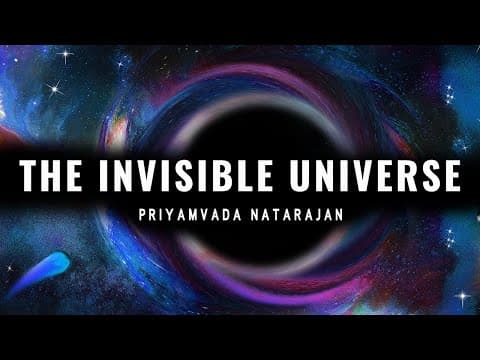
Priyamvada Natarajan of Yale University explores the current understanding of dark matter and black holes, tracing their distribution and growth histories.
This lecture delves into classical philosophical perspectives on happiness within the context of college education, drawing from foundational texts and historical thought.
Written text, unwritten constitutional norms, game-theoretic dominance, and externalities
Yale University · MIT
Quantum orbitals, proton gradients, bioelectric patterning, and paleogenomics
MIT · Yale University · Royal Institution +2
Cuneiform philology, Mediterranean trade networks, Hebrew scripture, and Roman urbanism
British Museum · George Washington University · Yale University +1
Classical Greek citizenship, Roman transformation, and early modern statecraft
Yale University
Browse every recorded lecture from Yale University.