
The Civil War and Reconstruction Era, 1845–1877
Pulitzer Prize historian David Blight examines the causes, military turning points, emancipation, constitutional remaking, and contested memory of the American Civil War and Reconstruction.
Ancient and modern history, classical civilizations, history of science, literature, and political thought.
Complete university lecture courses in history & humanities.
Pulitzer Prize historian David Blight examines the causes, military turning points, emancipation, constitutional remaking, and contested memory of the American Civil War and Reconstruction.
Donald Kagan traces Greek civilization from the Bronze Age collapse and rise of the polis through Athenian democracy, the Persian Wars, and Thucydides' Peloponnesian War.
Historical, literary, and archaeological study of the Hebrew Bible in its Ancient Near Eastern context: Mesopotamian myth, covenant law, prophecy, wisdom literature, and canon formation.
Joanne Freeman reconstructs the political, social, and ideological upheaval of British North America from imperial crisis and street protest through independence, war, and constitutional founding.
Concrete vaulting, urban forums, Pompeii, imperial palaces, the Colosseum, the Pantheon, Hadrian's Villa, and architectural engineering across the Roman provinces.
Surveys modern literary theory from Russian formalism, hermeneutics, semiotics, structuralism, and deconstruction to psychoanalysis, New Historicism, and postcolonial criticism.
Two complementary history talks paired around a central intellectual tension.
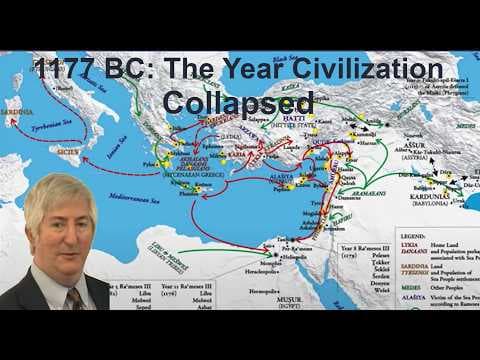
How interconnected Bronze Age kingdoms unraveled within a generation—paired with how early Rome constructed its own civic origin myths out of crisis.
Self-contained lectures, Nobel addresses, and research colloquia you can watch in one sitting.
Archival 1964 Cornell Messenger Lecture: Feynman traces Kepler, Tycho Brahe, Galileo, and Newton to show how a compact mathematical rule governs everything from falling apples to globular clusters.
Explore the historical tensions between oligarchic power and popular discontent, drawing insights from ancient Roman and Athenian political structures. Professor Melissa Lane examines models of elite accommodation versus irredentist resistance.
An advanced lecture investigating the mathematical principles behind natural tilings and soft cellular structures, bridging classical geometry with modern applied mathematics and biological physics.
Establishing the ancient Mediterranean religious and cosmic frameworks, providing the essential intellectual backdrop for understanding the genesis and evolution of early Christianities.
In her fifth Gifford Lecture, Professor Paula Fredriksen investigates the critical inflection points at which early gospel traditions evolved into distinct Christian movements, addressing ethnicity, divinity, and developing theological distinctions.
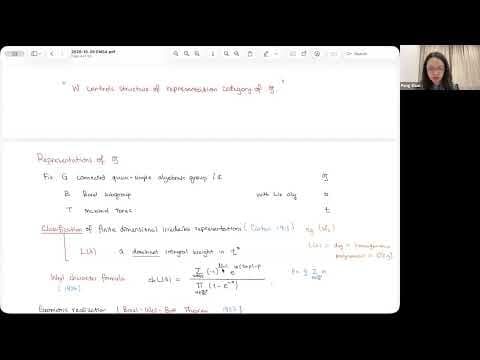
An advanced exposition on the current research program connecting affine Springer theory with representations of simple affine vertex algebras, detailing explicit correspondences and conjectures.
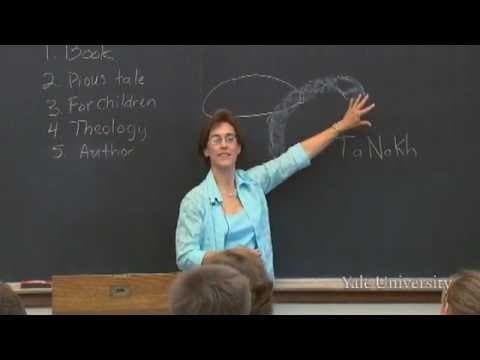
Cuneiform philology, Mediterranean trade networks, Hebrew scripture, and Roman urbanism
British Museum · George Washington University · Yale University +1
Classical Greek citizenship, Roman transformation, and early modern statecraft
Yale University