
Epidemics in Western Society Since 1600
Traces how bubonic plague, smallpox, cholera, tuberculosis, yellow fever, influenza, and HIV reshaped state power, urban sanitation, medical science, and social order.
Syllabus
22Introduction to the Course
This introductory lecture establishes the historical significance of epidemics since 1600, outlining the course's themes, and commencing with an examination of humoralism as an explanatory framework for the bubonic plague.
Classical Views of Disease: Hippocrates, Galen, and Humoralism
This lecture examines the foundational shift in ancient Greek medicine from supernatural etiologies to Hippocratic and Galenic humoral theory, analyzing its core tenets and lasting influence on Western medical thought.
Plague (I): Pestilence as Disease
This lecture, from Yale's 'Epidemics in Western Society Since 1600' course, examines the bubonic plague as an archetypical epidemic, detailing its extreme virulence, symptomatology, pathology, and historical impact across its three Western pandemics.

Plague (II): Responses and Measures
This lecture examines the socio-cultural and public health responses to the bubonic plague, detailing individual self-protection, religious revivals, and the nascent public health regulations enacted by Italian city-states. It scrutinizes the effectiveness of these early quarantine and containment measures.
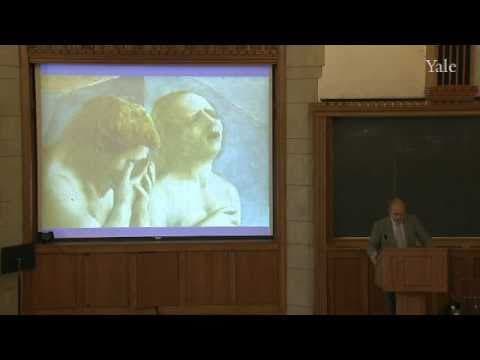
Plague (III): Illustrations and Conclusions
This lecture explores the profound cultural shifts engendered by the Black Death, analyzing the development of "Ars moriendi," the iconographies of "vanitas" and "danse macabre," and the emergence of plague saints cults, tracing the plague's influence through art, literature, and philosophical thought into the Enlightenment.

Smallpox (I): 'The Speckled Monster'
This lecture, part of Yale's "Epidemics in Western Society Since 1600" course, examines smallpox as a viral disease distinct from plague, detailing its etiology, transmission, epidemiology, and historical symptomatology. It also reviews pre-vaccination remedies.
Smallpox (II): Jenner, Vaccination, and Eradication
This lecture examines the historical trajectory of smallpox, detailing its endemic and epidemic phases in Europe and the devastating impact on unexposed populations in the New World. It analyzes the development and societal reception of inoculation and Edward Jenner's vaccination.

Nineteenth-Century Medicine: The Paris School of Medicine
This lecture examines how the Paris School of Medicine, emerging post-French Revolution, transitioned from Galenic 'library medicine' to an empirically-driven clinical epistemology focused on systematic observation and diagnosis within hospital settings.
Asiatic Cholera (I): Personal Reflections
Professor Snowden shares insights from his research on the 1884 and 1911 Asiatic cholera epidemics in Italy, highlighting the concealed 1911 outbreak and its implications for official historical narratives and public health.
Asiatic Cholera (II): Five Pandemics
This lecture analyzes the characteristics, symptoms, and societal impact of Asiatic cholera, exploring its five major 19th-century pandemics and the socio-political anxieties it engendered.
The Sanitary Movement and the 'Filth Theory of Disease'
This lecture explores the English Sanitary Movement, pioneered by Edwin Chadwick, examining its focus on urban cleansing as a public health strategy against infectious diseases and its intertwining with political objectives concerning the 'dangerous classes'.
Syphilis: From the "Great Pox" to the Modern Version
This lecture traces the history of syphilis from the 'Great Pox' epidemic, debating its origins and exploring how its catholicity and sexual transmission challenged Galenic medical theory, prompting new understandings of contagion.

Contagionism versus Anticontagionsim
This lecture dissects the 19th-century medical debate between contagionists and anticontagionists, detailing the miasmatic theory and Max von Pettenkofer's groundwater theory, contextualizing their impact on early public health policy before Koch's germ theory.
The Germ Theory of Disease
This lecture elucidates the conceptual, technological, and institutional preconditions—including contagionism and microscopy—that facilitated the revolutionary development of the germ theory of disease, enabling pathogen isolation and vaccine creation.

Tropical Medicine as a Discipline
This lecture analyzes tropical medicine's emergence as a distinct discipline during Western colonialism's golden age, revealing its socially constructed nature and Eurocentric biases that supported imperial expansion while addressing unfamiliar disease environments.
Malaria (I): The Case of Italy
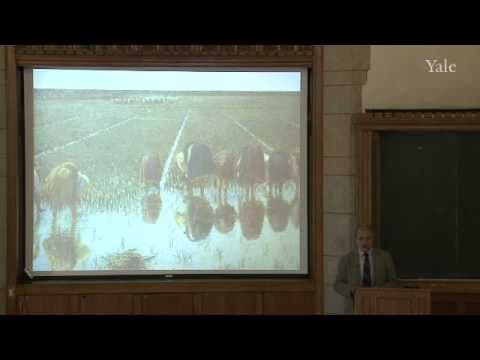
This lecture examines malaria's profound historical impact on human biology and civilization, focusing on its role in fostering genetic adaptations like sickle-cell anemia and perpetuating cycles of poverty, particularly through the Italian experience.
Malaria (II): The Global Challenge
This lecture explores the rise of malariology as a critical field, analyzing the complexities of malaria's resistance to public health strategies and drawing lessons from Italy's 1900-1962 eradication program for global efforts.

Tuberculosis (I): The Era of Consumption
This lecture details tuberculosis's resurgence in 19th-century Western Europe due to industrialization, contrasting its romanticized image as 'consumption' with later fears of contagion and poverty following the germ theory of disease.
Tuberculosis (II): After Robert Koch
This lecture examines tuberculosis's evolution from a romantic ailment to a social disease after Koch's discoveries, exploring how sanatoriums served as both educational and quarantine institutions, and discussing the unfulfilled promise of global eradication.
Pandemic Influenza
This lecture analyzes historical influenza pandemics, focusing on the 1918-1920 'Spanish Lady' which caused unprecedented mortality and an unusual demographic shift, informing contemporary public health strategies for similar outbreaks.
The Tuskegee Experiment
This lecture dissects the Tuskegee Syphilis Study, a notorious medical ethics violation from 1932 to 1972, revealing how researchers denied effective treatment to black male syphilitics and the lasting impact of this deception on medical trust.
AIDS (I)
This lecture presents the global AIDS pandemic as a case study, contrasting its impact in the Western world with its generalized presence as a disease of poverty in Southern Africa, highlighting the vicious cycle of infection and impeded public health.