
Foundations of Modern Social Theory
Close reading of Hobbes, Locke, Montesquieu, Rousseau, Adam Smith, John Stuart Mill, Karl Marx, Friedrich Nietzsche, Sigmund Freud, Max Weber, and Émile Durkheim.
Syllabus
22Introduction
This inaugural lecture for Yale's Foundations of Modern Social Thought introduces the intellectual landscape of influential thinkers from Hobbes and Locke to Marx and Nietzsche, outlining their biographical contexts and core philosophical contributions to social theory.
Hobbes: Authority, Human Rights and Social Order
This lecture analyzes Thomas Hobbes's political and social philosophy, focusing on the concepts of the state of nature, the social contract, and the role of a strong sovereign as articulated in his seminal work, "Leviathan." It also explores Hobbes's contributions to rational choice theory.
Locke: Equality, Freedom, Property and the Right to Dissent
This lecture analyzes John Locke's political theory, contrasting his state of nature, property rights, and separation of powers with the philosophy of Thomas Hobbes. It explicates the arguments from Locke's First and Second Treatises on Government.
The Division of Powers- Montesquieu
This lecture examines Montesquieu's contribution to political theory, focusing on his doctrine of the separation of governmental powers outlined in "The Spirit of the Laws." It contrasts his methodological collectivism with the individualism of Hobbes and Locke, and discusses his environmental determinism.
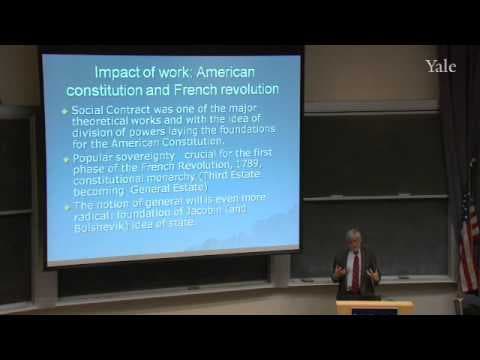
Rousseau: Popular Sovereignty and General Will
This lecture examines Jean-Jacques Rousseau's foundational political philosophy, focusing on the concepts of popular sovereignty, the general will, and their implications for legitimate governance as presented in *The Social Contract*.
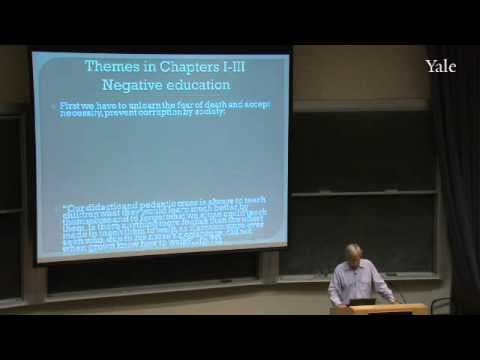
Rousseau on State of Nature and Education
This lecture unpacks Jean-Jacques Rousseau's foundational concepts of the 'general will' and the 'state of nature' as presented in his seminal works, particularly focusing on the educational philosophy articulated in Émile. It contrasts amour de soi with amour propre and examines the implications of 'negative education'.
Utilitarianism and Liberty, John Stuart Mill
This lecture examines the relationship between Adam Smith's concepts of self-interest and benevolence from "The Theory of Moral Sentiments" and "The Wealth of Nations," setting the historical and intellectual stage for John Stuart Mill's humanized theory of utilitarianism and his staunch defense of liberty.
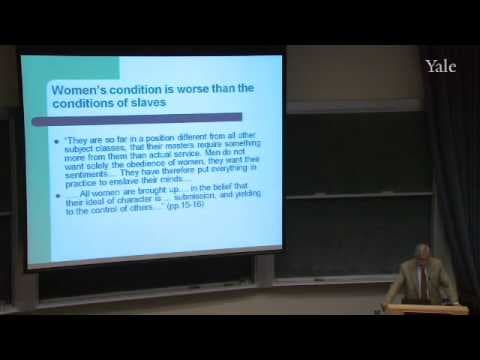
Mill: The Invisible Hand
This lecture dissects John Stuart Mill's significant amendments to Bentham's utilitarianism, focusing on qualitative differences in happiness and the distinction between legality and justice as higher principles.
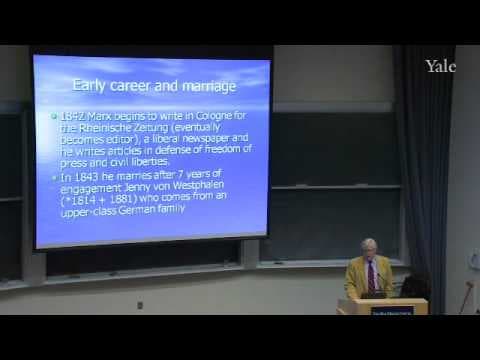
Marx's Theory of Alienation
This session traces Marx's intellectual break from the Young Hegelians, positing that alienation stems from material conditions rather than ideas, necessitating fundamental societal change.
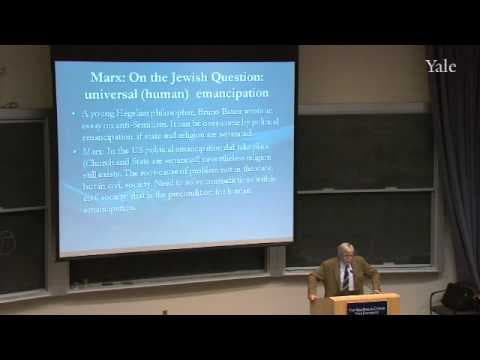
Marx's Theory of Historical Materialism (1)
This lecture examines Karl Marx's theory of alienation and traces the intellectual trajectory from the young to the mature Marx, contrasting his early Hegelian engagements with his developed theory of historical materialism. It specifically addresses Marx's response to Hegel's philosophy of right and Feuerbach's theses.
Marx's Theory of Historical Materialism (cont.)
This session continues the exploration of Marx's historical materialism, detailing his shift towards positivist determinism and analyzing his 'Theses on Feuerbach' to discuss theories of truth and material reality.
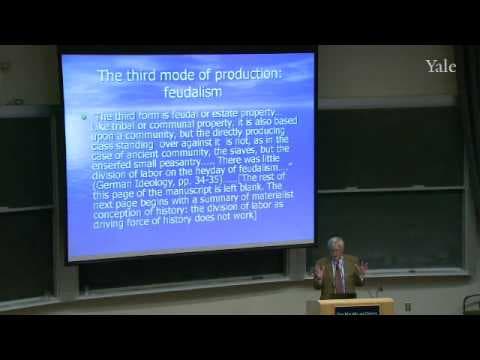
Marx's Theory of History
This lecture delves into Marx's Grundrisse, analyzing his revised, multi-linear theory of historical change focused on property relations and the development of different modes of production beyond a simple class struggle narrative.
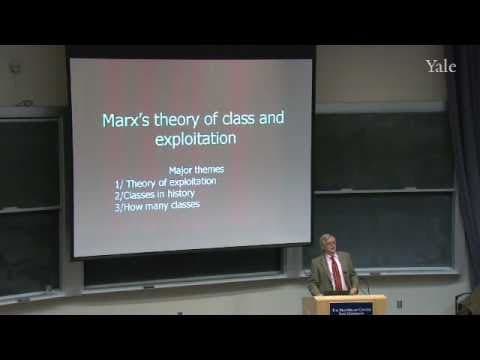
Marx's Theory of Class and Exploitation
This session elucidates Marx's transition from alienation to exploitation, detailing his concept of class within the capitalist mode of production, where labor power as a commodity generates surplus value for the owner.
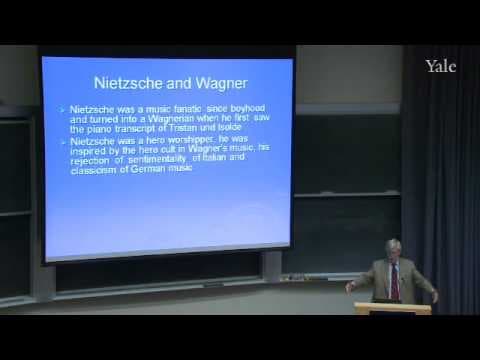
Nietzsche on Power, Knowledge and Morality
This lecture introduces Nietzsche, exploring his critical perspective on consciousness and assumptions, and his insights into power, knowledge, and morality as a bridge to 20th-century critical theory alongside Freud and Weber.
Freud on Sexuality and Civilization
This session explores Freud's psychoanalytic theory, detailing the id, ego, superego, and the drives of Eros and Thanatos, applying these concepts to civilization as discussed in "Totem and Taboo" and "Civilization and Its Discontents."
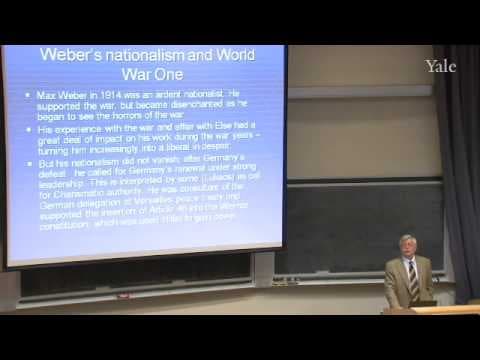
Weber on Protestantism and Capitalism
This lecture examines Max Weber's "The Protestant Ethic and the Spirit of Capitalism," arguing that Luther's concept of "calling" and Calvinist predestination provided fertile ground for the capitalist spirit.
Conceptual Foundations of Weber's Theory of Domination
This lecture outlines Weber's theory of domination, distinguishing it from Marx by positing different modes of authority (traditional, charismatic, legal-rational) as key to historical change, defined by power and legitimacy.
Weber on Traditional Authority
This session focuses on Weber's concept of traditional authority (Herrschaft), exploring its legitimation through established customs and practices, with a specific examination of patrimonialism and patriarchalism.
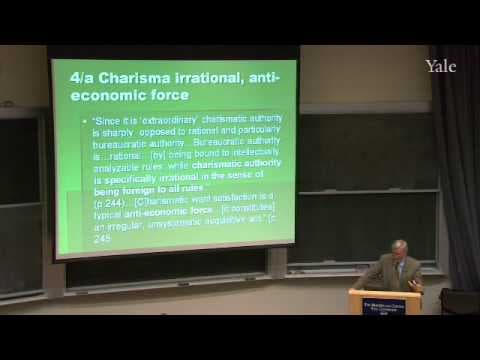
Weber on Charismatic Authority
This lecture analyzes Weber's charismatic authority, a revolutionary and unstable form rooted in followers' belief in a leader's exceptional qualities, and explores its potential for societal change and its inherent fragility.
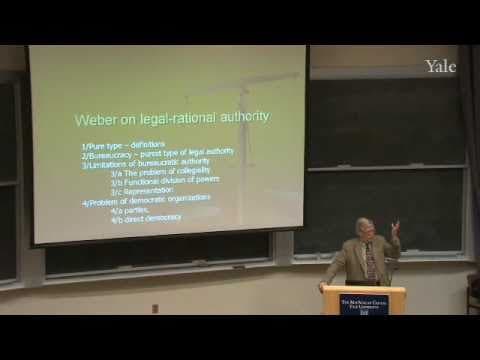
Weber on Legal-Rational Authority
This session examines Weber's ideal type of legal-rational authority, focusing on bureaucracy as its purest form, characterized by rule-bound institutions, fixed salaries, hierarchy, and technical skill-based appointments.
Weber's Theory of Class
This lecture compares Weber's theory of class with Marx's, detailing the shift from status-determined life chances in feudalism to market-determined class positions in modern capitalism, emphasizing the modern genesis of class.
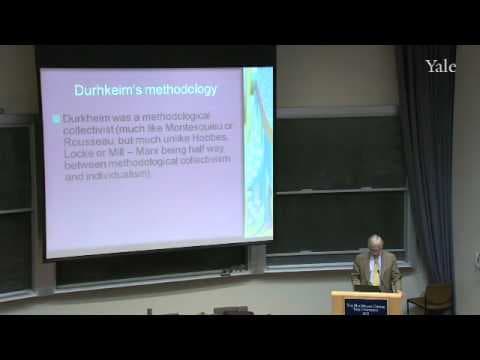
Durkheim and Types of Social Solidarity
This lecture introduces Émile Durkheim, a foundational sociologist, examining his functionalist and positivist perspectives on social solidarity as presented in "The Division of Labor in Society," and his later cultural turn.