Probability, Primes & Computational Hardness
Discrete proof invariants, stochastic conditioning, pseudorandomness, and P vs. NP
Unites MIT discrete mathematics, Harvard STAT 110 probability, Terence Tao on structure vs. randomness in the primes, and IAS/Simons complexity theory.
Start Step 16 steps · 5h total
Curriculum sequence
6
Introduction and Proofs (MIT 6.042J, Lecture 1)
Establishes mathematical proof structure, predicates, and axiomatic deduction for CS.

Lecture 1: Probability and Counting | Statistics 110
Builds sample spaces and combinatorial symmetry from first principles.
Lecture 2: Story Proofs, Axioms of Probability | Statistics 110
Replaces algebraic manipulation with intuitive story proofs and probabilistic axioms.
Step 4·UCLA·Terence Tao· 47:51

Structure and Randomness in the Prime Numbers
Reveals how structured harmonics and pseudorandomness coexist inside the prime numbers.
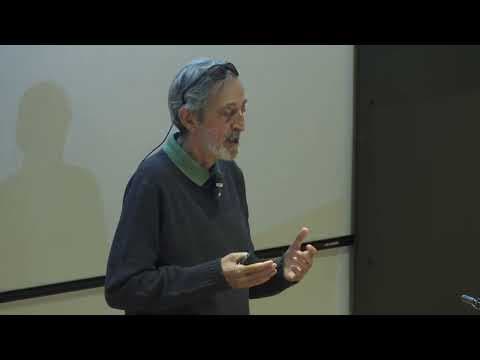
Step 5·Institute for Advanced Study·Avi Wigderson· 1:02:49

Mathematics and Computation: The Landscape of P vs. NP
Maps efficient verification, NP-completeness, and hardness-versus-randomness dualities.
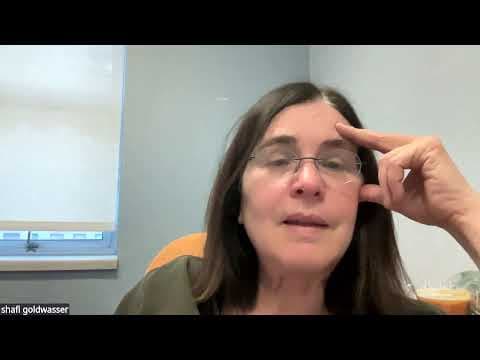
Step 6·Simons Institute (UC Berkeley)·Shafi Goldwasser· 1:02:15

What Can the Theory of Cryptography Tell Us About AI Verification?
Extends interactive cryptographic proof systems to trustworthy machine learning.