Host's introduction and plaque presentation photo session.
2:31 left
May traces patients in federally qualified health centers from abnormal stool tests to missed colonoscopies.
Colorectal cancer screening disparities persist across racial and ethnic groups even as national incidence and mortality decline. At Yale Cancer Center Grand Rounds, Folasade May starts from national trends, the rise of early-onset disease under fifty, and how screening prevents cancer by removing polyps. She then traces how screening rates split by race, ethnicity and insurance type through social determinants of health. Data from federally qualified health centers show steep drop-offs between abnormal stool tests and completed colonoscopy, and May argues for multilevel, culturally tailored interventions and community partnerships. She closes by asking whether blood-based tests shift screening from prevention to early detection.
Is it for you
Summary written with AI from the lecture and its description
What you will take away
1Colorectal cancer is the third most common cause of cancer in the United States, yet one in three adults remain unscreened.
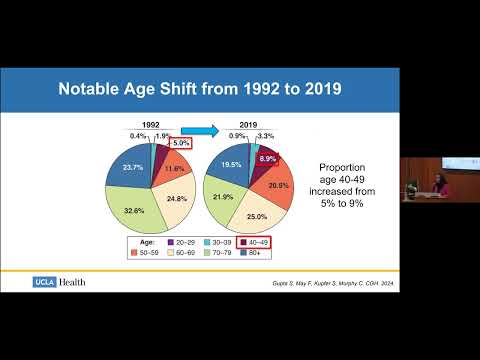
2Early age onset colorectal cancer rates in individuals under fifty challenge historical assumptions about screening age.
3Federally qualified health centers serve millions of underserved patients but face severe drop-offs in colonoscopy completion after abnormal stool tests.
Where next
27 connections
Keep goingInvestigating the Complex Biology of Drug Resistance for Clinical Impact (Yale Cancer Center Grand Rounds)Next in the course, 17 of 26.
Associate Professor of Medicine, David Geffen School of Medicine at UCLA, Yale University · 26 lectures here
May traces patients in federally qualified health centers from abnormal stool tests to missed colonoscopies.
Read moreShow fewer
Colorectal cancer screening disparities persist across racial and ethnic groups even as national incidence and mortality decline. At Yale Cancer Center Grand Rounds, Folasade May starts from national trends, the rise of early-onset disease under fifty, and how screening prevents cancer by removing polyps. She then traces how screening rates split by race, ethnicity and insurance type through social determinants of health. Data from federally qualified health centers show steep drop-offs between abnormal stool tests and completed colonoscopy, and May argues for multilevel, culturally tailored interventions and community partnerships. She closes by asking whether blood-based tests shift screening from prevention to early detection.
Multi-level interventions must target patients, providers, health systems, and policy to effectively eliminate screening disparities.
5New blood-based screening tests offer convenience but primarily provide early detection rather than primary prevention.
Before you start
Good fit if
Medical students, clinicians, and health services researchers interested in cancer screening disparities and implementation science. Some of the audience questions and answers near the end are slightly muffled. Explains the material in order, conversational in tone and warm toward the audience. Takes questions along the way.
Dismantling Inequities in Colorectal Cancer Screening and Outcomes (Yale Cancer Center Grand Rounds)
Talk 16 of 26 of Yale Cancer Center Grand Rounds.
Choose a node to see how it connects to this lecture. What comes before is on the leftat the top. What comes after is on the rightat the bottom. The ring is what it teaches. People and places are above. Other lectures and books are below.