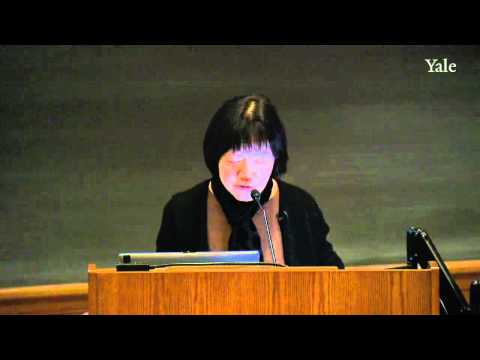
Opening Hemingway's In Our Time
Hemingway's In Our Time
- Length
- 50 min
- Level
- Undergraduate
- Recorded
- Yale University2012
Opening Hemingway's In Our Time
Chapter 1 of 6: Publication history and reception
Hemingway, Fitzgerald, Faulkner (AMST 246)
Professor Wai Chee Dimock discusses Hemingway's first book In Our Time, a collection of vignettes published in 1925 that launched Hemingway's career as a leading American modernist. Professor Dimock examines a cluster of three vignettes from In Our Time to show how Hemingway's laconic style naturalizes problems of pain and violence amidst the ethnic tensions of the American Midwest. Drawing on the theoretical writings of critics Elaine Scarry and Susan Sontag, and the artistic representations of painter Edvard Munch, Professor Dimock shows how language probes the empathetic boundaries of communal suffering in "Indian Camp" and "Chapter II." She concludes with a discussion of "The Doctor and the Doctor's Wife" that shows how inter-ethnic conflict between Native Americans and whites is neutralized by the primitive impulse of peacekeeping, the opposite of the violence she reads in the two other vignettes in this cluster.

Your comment is kept while you sign up.Sign in
Dimock analyzes Hemingway's In Our Time, performing close readings of "Indian Camp" and "Chapter II" through the lens of Elaine Scarry and Susan Sontag.
Hemingway, Fitzgerald, Faulkner (AMST 246)
Professor Wai Chee Dimock discusses Hemingway's first book In Our Time, a collection of vignettes published in 1925 that launched Hemingway's career as a leading American modernist. Professor Dimock examines a cluster of three vignettes from In Our Time to show how Hemingway's laconic style naturalizes problems of pain and violence amidst the ethnic tensions of the American Midwest. Drawing on the theoretical writings of critics Elaine Scarry and Susan Sontag, and the artistic representations of painter Edvard Munch, Professor Dimock shows how language probes the empathetic boundaries of communal suffering in "Indian Camp" and "Chapter II." She concludes with a discussion of "The Doctor and the Doctor's Wife" that shows how inter-ethnic conflict between Native Americans and whites is neutralized by the primitive impulse of peacekeeping, the opposite of the violence she reads in the two other vignettes in this cluster.
Book of Common Prayer
The Little Review
Transatlantic Review
The Body in Pain
Amnesty International archives
Regarding the Pain of Others
In Our Time
This lecture
Lecture 2 of 25 of Hemingway, Fitzgerald, Faulkner.
Choose a node to see how it connects to this lecture. What comes before is on the leftat the top. What comes after is on the rightat the bottom. The ring is what it teaches. People and places are above. Other lectures and books are below.
Press a chosen node again to open it.