
Opening Melody: Mozart and Wagner
Melody: Mozart and Wagner
- Length
- 48 min
- Level
- Undergraduate
- Recorded
- Yale University2012
Opening Melody: Mozart and Wagner
Chapter 1 of 6: Phrase structure and the definition of a melody
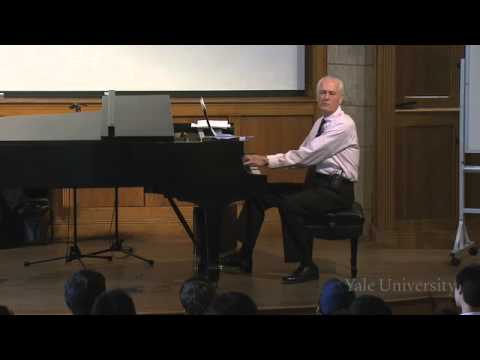
Melody in Western classical music rests on antecedent and consequent phrases, a question-and-answer structure that Wright sets out before turning to whole arias. Puccini's O mio babbino caro from Gianni Schicchi shows how authentic and deceptive cadences shape a melody's arrival. Wright then follows the rising melodic sequences and chromatic tension of the prelude to Wagner's Tristan und Isolde. In the Liebestod, dynamics, tempo and sequence carry that tension to its resolution. Finally, guest artist Lauren Libal sings Voi che sapete from Mozart's Le nozze di Figaro, illustrating phrase expansion, rising sequences and deceptive cadences.
Your comment is kept while you sign up.Sign in
Follows Wagner's rising chromatic sequences in Tristan und Isolde, then hears Voi che sapete sung live.
Melody in Western classical music rests on antecedent and consequent phrases, a question-and-answer structure that Wright sets out before turning to whole arias. Puccini's O mio babbino caro from Gianni Schicchi shows how authentic and deceptive cadences shape a melody's arrival. Wright then follows the rising melodic sequences and chromatic tension of the prelude to Wagner's Tristan und Isolde. In the Liebestod, dynamics, tempo and sequence carry that tension to its resolution. Finally, guest artist Lauren Libal sings Voi che sapete from Mozart's Le nozze di Figaro, illustrating phrase expansion, rising sequences and deceptive cadences.
This lecture
Lecture 6 of 23 of Listening to Music.
Choose a node to see how it connects to this lecture. What comes before is on the leftat the top. What comes after is on the rightat the bottom. The ring is what it teaches. People and places are above.
Press a chosen node again to open it.


