Opening The Twelve Caesars, Part 4: Female Members of the Imperial Court and Dynastic Succession
The Twelve Caesars, Part 4: Female Members of the Imperial Court and Dynastic Succession
- Length
- 1 h 2 min
- Level
- Undergraduate
Opening The Twelve Caesars, Part 4: Female Members of the Imperial Court and Dynastic Succession
Chapter 1 of 8: Before the lecture
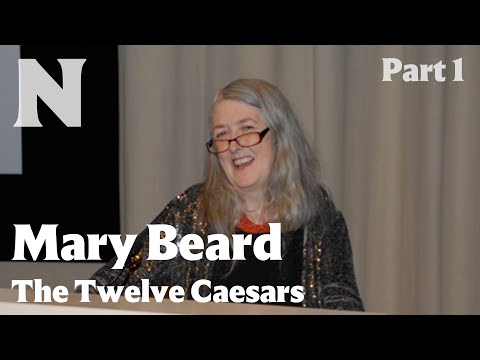
Roman imperial women held no official title of empress, yet ancient writers such as Suetonius cast them as the hidden power behind the throne. Beard, speaking at the National Gallery of Art in 2011, argues that accusations of adultery and poisoning policed the pressure points of dynastic succession. Gems and cameos make that succession explicit, equating imperial fertility with agricultural plenty through the attributes of Ceres. She then follows the two Agrippinas into post-antique art, from medieval tales of Nero dissecting his mother's womb to Canova's disputed statue of Napoleon's mother. The lecture assumes some knowledge of the Julio-Claudians.

Your comment is kept while you sign up.Sign in
Beard reads the Rubens double portrait in the National Gallery as Tiberius and Vipsania Agrippina.
Roman imperial women held no official title of empress, yet ancient writers such as Suetonius cast them as the hidden power behind the throne. Beard, speaking at the National Gallery of Art in 2011, argues that accusations of adultery and poisoning policed the pressure points of dynastic succession. Gems and cameos make that succession explicit, equating imperial fertility with agricultural plenty through the attributes of Ceres. She then follows the two Agrippinas into post-antique art, from medieval tales of Nero dissecting his mother's womb to Canova's disputed statue of Napoleon's mother. The lecture assumes some knowledge of the Julio-Claudians.
I, Claudius
I, Claudius (1976)
Promptuarii Iconum Insigniorum
Roman de la Rose
Boccaccio's biographies of famous men
Canterbury Tales
Illustrations of Famous Faces
This lecture
Lecture 4 of 6 of The Twelve Caesars.
Choose a node to see how it connects to this lecture. What comes before is on the leftat the top. What comes after is on the rightat the bottom. The ring is what it teaches. People and places are above. Other lectures and books are below.
Press a chosen node again to open it.