
The Challenge of World Poverty
Nobel laureates Esther Duflo and Abhijit Banerjee analyze poverty traps, randomized controlled trials, nutrition, preventive health, education incentives, microcredit, insurance, and institutional governance.
Syllabus
22Introduction (14.73 The Challenge of World Poverty)
This introductory lecture frames the core questions and methodological approaches in development economics, focusing on the empirical challenges in understanding and addressing global poverty. It sets the stage for analyzing various interventions and their impact.
What is a Poverty Trap?
This lecture introduces the concept of a poverty trap, examining theoretical models and empirical evidence that explain mechanisms through which individuals or households can become stuck in persistent poverty. Key economic factors and policy implications are discussed.
Social Experiments: Why and How?
This lecture, from MIT's "The Challenge of World Poverty" course, details the theoretical underpinnings and practical methodologies for designing and implementing social experiments, particularly randomized controlled trials (RCTs), in development economics.
Is There a Nutrition-Based Poverty Trap?
This lecture explores the theoretical and empirical evidence for a nutrition-based poverty trap, examining the mechanisms through which nutritional deficits might perpetuate intergenerational poverty. It analyzes microeconomic models and econometric studies of health and productivity.
Nutrition: The Hidden Traps
This lecture examines the complex interplay of economic incentives, behavioral biases, and public health interventions that influence nutritional outcomes in developing economies. Duflo analyzes empirical evidence on the effectiveness and unintended consequences of various nutrition programs.
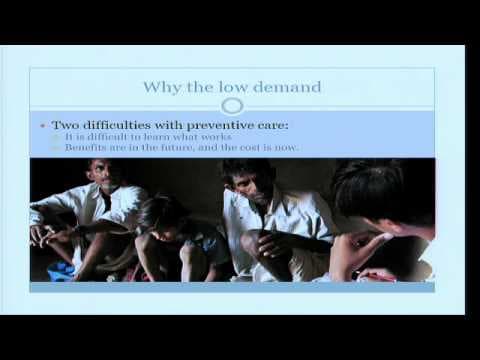
Health: Low Hanging Fruit?
Esther Duflo examines the efficacy and challenges of health interventions in development economics, questioning whether accessible health improvements represent a 'low-hanging fruit' for poverty reduction. The lecture analyzes empirical evidence from randomized controlled trials.
Education: Setting the Stage
Esther Duflo initiates the module on education within development economics, examining the foundational role of schooling in poverty alleviation. This lecture introduces theoretical frameworks and empirical challenges in assessing educational interventions in low-income settings.
Is It Possible to Deliver Quality Education to the Poor? The Pratham-JPAL Partnership
This lecture examines the effectiveness of educational interventions in impoverished settings, specifically analyzing the outcomes and methodologies of the Pratham-JPAL partnership in delivering quality education.
Education: The Man Made Trap
This session explores the complex interplay of human-made structures and systems that perpetuate educational disadvantage, focusing on how these traps impact the poor's access to and benefit from schooling.
(Somewhat) Un-Orthodox Findings on the Family
This lecture presents counter-intuitive research findings on family structures and decision-making in the context of poverty, challenging conventional assumptions about household dynamics and welfare.
How Do Families Decide?
This session delves into the intricate mechanisms of household decision-making under scarcity, analyzing models and empirical evidence on choices related to consumption, investment, and resource allocation within families.
Gender Discrimination
This lecture investigates the economic manifestations and consequences of gender discrimination, exploring its impact on labor markets, education, health, and household bargaining power in developing contexts.
Risk and Insurance
This lecture analyzes the theoretical underpinnings of risk and uncertainty faced by the poor, examining how formal and informal insurance mechanisms function to mitigate financial vulnerabilities and shocks.
Insurance
Building on the previous session, this lecture further explores the design, adoption, and effectiveness of insurance products tailored for low-income populations, addressing challenges like moral hazard and adverse selection.
The (Not So Simple) Economics of Lending to the Poor
This session dissects the complex economic challenges inherent in providing credit to the poor, including issues of information asymmetry, collateral, and the rationale behind microcredit models.
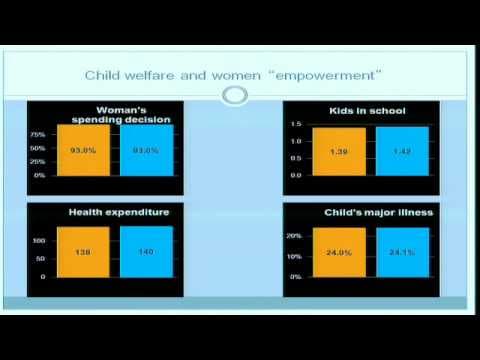
The Promise and Perils of Microfinance
This lecture provides a critical evaluation of microfinance, discussing its potential to alleviate poverty alongside its limitations, unintended consequences, and the empirical evidence surrounding its impact.

Savings
This lecture examines the behaviors and constraints surrounding savings among the poor, exploring the role of behavioral economics in understanding low savings rates and designing effective savings products.
Savings 2
Continuing the discussion on savings, this session delves into innovative interventions and policy tools aimed at promoting and facilitating savings among vulnerable populations, such as commitment devices and nudges.
Entrepreneurs and Workers
This lecture investigates the economic lives of the poor as entrepreneurs and workers, analyzing the challenges of small-scale enterprises, labor market dynamics, and the role of human capital in income generation.
Policies, Politics: Can Evidence Play a Role in the Fight Against Poverty?
This session critically examines the interface between evidence-based policymaking and political realities in poverty alleviation, discussing how rigorous research can inform and navigate policy processes.
Policies, Politics: Can Evidence Play a Role in the Fight Against Poverty?, cont.
This continuation further explores the practical application and challenges of integrating empirical evidence into anti-poverty policies, considering issues of scalability, context, and political will in implementation.
Five Thoughts in Place of a Sweeping Conclusion
This concluding lecture distills key insights from the course into five overarching reflections, synthesizing complex themes on poverty and development into actionable principles and enduring questions.