Active Inference, Cybernetics & Artificial Life
This study path explores the foundational principles of self-organizing systems, progressing from classical feedback control to the Free Energy Principle as a unifying framework for biological and artificial intelligence. It culminates in examining the potential for digital life and its implications for understanding consciousness and reality.
From Feedback Control to the Free Energy Principle and the Evolution of Digital Life
5steps8htotal runtime
Step 1 of 5
Path progress0 of 5 watched
Curriculum sequence
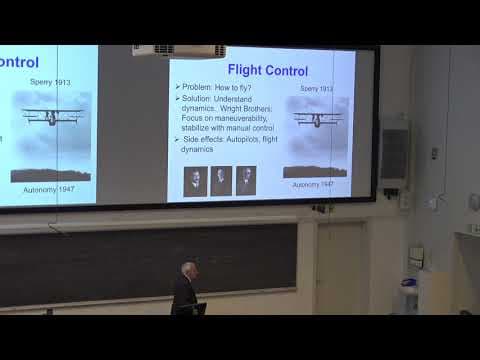
5Step 1·Lund University·Karl Johan Åström· 1:04:23
The History and Unreasonable Effectiveness of Feedback Control
This lecture introduces the fundamental concept of feedback control, a cornerstone of cybernetics, illustrating how systems maintain stability and achieve goals through self-regulation.

Step 2·University College London·Karl Friston· 1:18:47
Unifying the Cognitive Sciences: The Free Energy Principle
Building on feedback control, this lecture introduces the Free Energy Principle as a more general framework, explaining how biological systems minimize prediction error to maintain their existence and adapt to their environment.

Step 3·University College London·Karl Friston· 1:30:15
The Physics of Communication
This lecture extends the Free Energy Principle to the domain of communication, demonstrating how information exchange can be understood as a process of minimizing free energy, thus linking perception, action, and interaction.
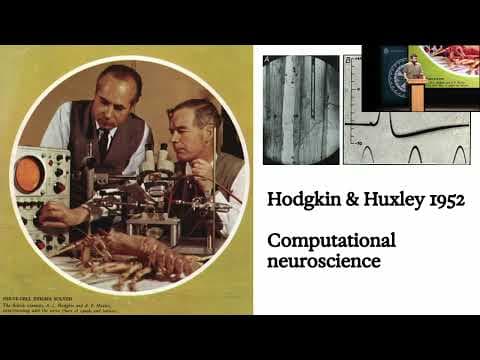

Computing, Life, and Intelligence
Transitioning from theoretical principles, this lecture explores the practical implications of these ideas by examining the emergence of digital life and intelligence, connecting theoretical biology with computer science.
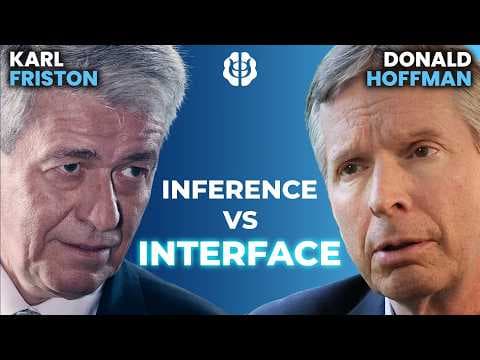
Step 5·UC Irvine & UCL·Donald Hoffman & Karl Friston· 2:40:25
What is Ultimately Real? Consciousness, Free Energy, and Spacetime
This culminating lecture engages with the most profound implications of active inference and the Free Energy Principle, exploring how these frameworks challenge our understanding of consciousness, spacetime, and the ultimate nature of reality.
Companion reading for this sequence
Amazon Associate
