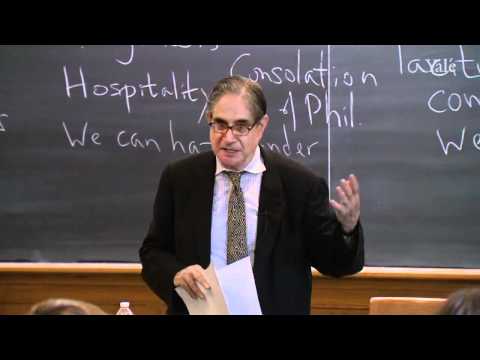
07. Barbarian Kingdoms

This lecture examines the formation of post-Roman barbarian kingdoms, analyzing Roman accommodation policies, the organizational structures of tribes such as the Ostrogoths and Vandals, and intellectual life after 476 CE. It concludes with an analysis of the Burgundian Code as primary legal evidence.
The Early Middle Ages, 284--1000 (HIST 210)
In this lecture, Professor Freedman considers the various barbarian kingdoms that replaced the Western Roman Empire. Oringinally the Roman reaction to these invaders had been to accommodate them, often recruiting them for the Roman army and settling them on Roman land. Now, however, they were the rulers of the previously Roman lands of the West. These tribes included the Ostrogoths and Visigoths in Italy, the Franks in Gaul, and the Vandals in North Africa. As most sources about these groups come from the Roman perspective, it's unclear how coherent each group was. In general, the barbarian groups characterized by disorganization, internal fighting and internecine feuds, and lack of economic development. Professor Freedman closes with some remarks on the Burgundian Code as evidence of barbarian society and institutions.
06. Transformation of the Roman Empire
Next · Lecture 8Lecture 8: Survival in the East (HIST 210)
Seminar notes & discussion
No public seminar notes on this lecture yet.