1. Introduction, Threat Models
1:17:122. Control Hijacking Attacks
1:27:383. Buffer Overflow Exploits and Defenses
1:21:374. Privilege Separation
1:23:296. Capabilities
1:21:577. Sandboxing Native Code
1:23:218. Web Security Model
1:22:489. Securing Web Applications
1:22:08Lecture 10: Symbolic Execution (6.858)
1:22:16Lecture 11: Ur/Web (6.858)
1:20:04Lecture 12: Network Security (6.858)
1:18:26Lecture 13: Network Protocols (6.858)
1:21:03Lecture 14: SSL and HTTPS (6.858)
1:18:18Lecture 15: Medical Software (6.858)
1:15:31Lecture 16: Side-Channel Attacks (6.858)
1:22:16Lecture 17: User Authentication (6.858)
1:19:48Lecture 18: Private Browsing (6.858)
1:20:13Lecture 19: Anonymous Communication (6.858)
1:20:13Lecture 20: Mobile Phone Security (6.858)
1:22:00Lecture 21: Data Tracking (6.858)
1:19:38Lecture 22: Information Security at MIT IS&T (6.858)
1:26:51Lecture 23: Security Economics (6.858)
1:17:251. Introduction, Threat Models

Professor of Electrical Engineering and Computer Science
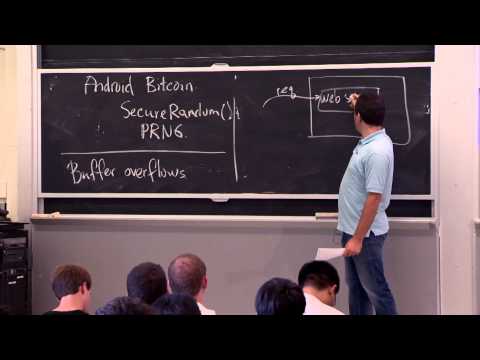
This introductory lecture establishes the foundational concepts of computer systems security, outlining course organization and the critical framework of threat models for analyzing system vulnerabilities and attacker capabilities.
MIT 6.858 Computer Systems Security, Fall 2014
View the complete course: http://ocw.mit.edu/6-858F14
Instructor: Nickolai Zeldovich
Seminar notes & discussion
No public seminar notes on this lecture yet.