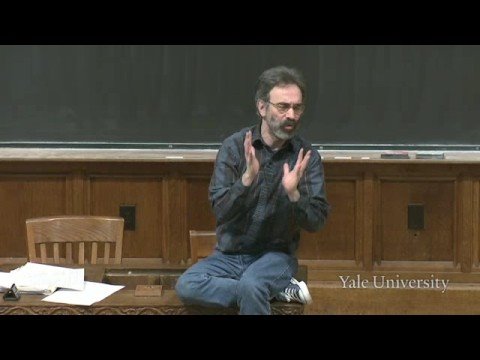
Opening A History of Philosophy: Scottish Realism
A History of Philosophy: Scottish Realism
- Length
- 1 h 2 min
- Level
- Undergraduate
- Recorded
- Wheaton College2015
Opening A History of Philosophy: Scottish Realism
Chapter 1 of 8: Historical context of Scottish realism
Traces Thomas Reid's defense of direct realism, natural beliefs, and agency against Humean skepticism.
Scottish Realism emerges in the late eighteenth-century Edinburgh Enlightenment as a critical response to British empiricism and Humean skepticism. Thomas Reid rejects the prevailing representational theory of ideas, arguing instead for direct realism and the existence of a common sense foundation for knowledge. The lecture explores Reid's core positions, including natural beliefs grounded in the intrinsic constitution of human nature and supported by a theistic framework. It then examines his treatment of human agency and free will over against determinism, before turning to his first principles of ethics. These concepts establish a foundationalist epistemology that bridges early modern philosophy and the critical philosophy of Immanuel Kant.
Scottish Realism emerges in the late eighteenth-century Edinburgh Enlightenment as a critical response to British empiricism and Humean skepticism. Thomas Reid rejects the prevailing representational theory of ideas, arguing instead for direct realism and the existence of a common sense foundation for knowledge. The lecture explores Reid's core positions, including natural beliefs grounded in the intrinsic constitution of human nature and supported by a theistic framework. It then examines his treatment of human agency and free will over against determinism, before turning to his first principles of ethics. These concepts establish a foundationalist epistemology that bridges early modern philosophy and the critical philosophy of Immanuel Kant.
Mind
George Berkeley's Idealism
Enquiry concerning Human Understanding
David Hume's Philosophy of Religion
Calvin's Institutes

This lecture
Lecture 50 of 81 of A History of Western Philosophy.
Choose a node to see how it connects to this lecture. What comes before is on the leftat the top. What comes after is on the rightat the bottom. The ring is what it teaches. People and places are above. Other lectures and books are below.
Press a chosen node again to open it.
Your comment is kept while you sign up.Sign in