Arthur F. Holmes
Professor of Philosophy · Wheaton College
Arthur F. Holmes was Professor of Philosophy at Wheaton College from 1951 to 1994, where he built the philosophy department and wrote on the philosophy of Christian education.
- lectures
- 58
- series
- 1
- hours
- 58
Start here


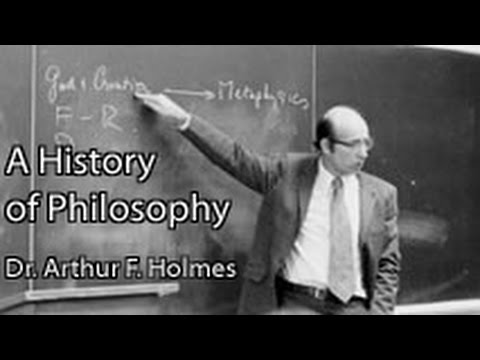
Series and courses
A History of Western Philosophy
Open the course
- 23The Problem of Universals (A History of Philosophy, Lecture 23)
- 24Thomas Aquinas' Christian Aristotelianism (A History of Philosophy, Lecture 24)
- 25Aquinas on God
- 26Aquinas' Moral Psychology and Ethics (A History of Philosophy, Lecture 26)
Show 54 moreShow fewer
- 27Duns Scotus and William of Ockham (A History of Philosophy, Lecture 27)
- 28A History of Philosophy: Summing Up Ockham's Revolution
- 29A History of Philosophy: Francis Bacon
- 30A History of Philosophy: Thomas Hobbes
- 32Descartes' Meditations on First Philosophy, Part 1
- 33Descartes' Meditations: The Cogito and the Nature of Mind
- 34Descartes on God and Nature (A History of Philosophy, Lecture 34)
- 35Descartes' Moral and Psychological Ethics (A History of Philosophy, Lecture 35)
- 36A History of Philosophy: Spinoza
- 37Reason and Emotions in Spinoza (A History of Philosophy, Lecture 37)
- 38A History of Philosophy: Spinoza (continued) and Leibniz
- 39Leibniz's Monads (A History of Philosophy, Lecture 39)
- 40Leibniz on Evil (A History of Philosophy, Lecture 40)
- 41A History of Philosophy: John Locke
- 42John Locke's Theory of Ideas (A History of Philosophy, Lecture 42)
- 43Locke on Religion, Ethics, and Politics (A History of Philosophy, Lecture 43)
- 44A History of Philosophy: George Berkeley's Idealism
- 45A History of Philosophy: Berkeley's Replies to Objections
- 46A History of Philosophy: David Hume
- 47Hume: Do We Know What's Real? (A History of Philosophy, Lecture 47)
- 48Hume on Religion and Ethics (A History of Philosophy, Lecture 48)
- 49A History of Philosophy: Reactions to David Hume
- 50A History of Philosophy: Scottish Realism
- 51A History of Philosophy: Introducing Immanuel Kant
- 52Kant's Epistemology (A History of Philosophy, Lecture 52)
- 53Kant on Understanding (A History of Philosophy, Lecture 53)
- 54Kant on Metaphysics (A History of Philosophy, Lecture 54)
- 55Kant's Ethics (A History of Philosophy, Lecture 55)
- 56A History of Philosophy: German Idealism
- 57A History of Philosophy: Hegel
- 58Hegel's Phenomenology of Mind (A History of Philosophy, Lecture 58)
- 59Hegel on Absolute Spirit (A History of Philosophy, Lecture 59)
- 60Post-Hegelian Idealism (A History of Philosophy, Lecture 60)
- 61Whitehead's Process Philosophy (A History of Philosophy, Lecture 61)
- 62Whitehead and Process Theology (A History of Philosophy, Lecture 62)
- 63Whitehead's "Science and the Modern World" (A History of Philosophy, Lecture 63)
- 64American Pragmatism (A History of Philosophy, Lecture 64)
- 65A History of Philosophy: John Dewey
- 66Dewey's "Reconstructive Philosophy" (A History of Philosophy, Lecture 66)
- 67Introduction to Existentialism (A History of Philosophy, Lecture 67)
- 68Historical Roots of Existentialism: Kierkegaard (A History of Philosophy, Lecture 68)
- 69Nietzsche and Introduction to Phenomenology (A History of Philosophy, Lecture 69)
- 70A History of Philosophy: Husserl and Heidegger
- 71A History of Philosophy: Jean-Paul Sartre
- 72A History of Philosophy: Other Phenomenologists
- 7319th Century Empiricism (A History of Philosophy, Lecture 73)
- 74Bertrand Russell: Logical Atomism
- 75A History of Philosophy: Ludwig Wittgenstein
- 76A History of Philosophy: Logical Positivism
- 77A.J. Ayer: Language, Truth and Logic (A History of Philosophy, Lecture 77)
- 78A History of Philosophy: Ordinary Language Philosophy
- 79Ethics Since Logical Positivism (A History of Philosophy, Lecture 79)
- 80Philosophy of Language (A History of Philosophy, Lecture 80)
- 81Philosophy Today and Tomorrow (A History of Philosophy, Lecture 81)
In these lectures
- Kant insists that objective moral truths and duties exist independently of human desires.Kant's Ethics (A History of Philosophy, Lecture 55)
- Kant defines his philosophical project as a response to David Hume's skepticism regarding the principle of cause and effect.A History of Philosophy: Introducing Immanuel Kant
- George Berkeley defines metaphysical idealism as the view that all that exists is of the nature of mind and immaterial spirit.A History of Philosophy: George Berkeley's Idealism
Draws on
People cited in the lectures, at the moment of the citation.
- John LockeCited for his attempt to ground natural law in human nature, and his connection to Ralph Cudworth.
- David HumeDiscussed regarding recent interpretations of his views on moral sense and ethical realism.
- Thomas HobbesDescribed by 18th-century thinkers as a thoroughgoing hedonist and determinist.
- René DescartesCited for philosophical positions built on mechanistic science.
- Thomas AquinasMedieval philosopher whose hierarchy of being aligns with Leibniz's principles.
- John Stuart MillCited as part of 19th-century phenomenalism.
About
Arthur F. Holmes was Professor of Philosophy at Wheaton College from 1951 to 1994, where he built the philosophy department and wrote on the philosophy of Christian education. His undergraduate survey of Western philosophy works through Leibniz's monads, Kant's categorical imperative and Wittgenstein's Tractatus.
Taught with
Same subject, Philosophy & Ethics
Connections
61Their places, courses, books and lectures.
Institution1
Concept1
Lectures58
- Kant's Ethics (A History of Philosophy, Lecture 55)
- A History of Philosophy: Introducing Immanuel Kant
- A History of Philosophy: George Berkeley's Idealism
- Leibniz's Monads (A History of Philosophy, Lecture 39)
- A History of Philosophy: Spinoza
- A History of Philosophy: David Hume
Show 52 moreShow fewer
- Aquinas on God
- A History of Philosophy: Ordinary Language Philosophy
- A History of Philosophy: Ludwig Wittgenstein
- Hegel's Phenomenology of Mind (A History of Philosophy, Lecture 58)
- Aquinas' Moral Psychology and Ethics (A History of Philosophy, Lecture 26)
- A History of Philosophy: Francis Bacon
- A History of Philosophy: Husserl and Heidegger
- Hegel on Absolute Spirit (A History of Philosophy, Lecture 59)
- A History of Philosophy: John Locke
- Hume on Religion and Ethics (A History of Philosophy, Lecture 48)
- Kant's Epistemology (A History of Philosophy, Lecture 52)
- A History of Philosophy: Spinoza (continued) and Leibniz
- Thomas Aquinas' Christian Aristotelianism (A History of Philosophy, Lecture 24)
- A History of Philosophy: German Idealism
- Bertrand Russell: Logical Atomism
- A.J. Ayer: Language, Truth and Logic (A History of Philosophy, Lecture 77)
- Post-Hegelian Idealism (A History of Philosophy, Lecture 60)
- Kant on Understanding (A History of Philosophy, Lecture 53)
- Leibniz on Evil (A History of Philosophy, Lecture 40)
- A History of Philosophy: Scottish Realism
- Whitehead's "Science and the Modern World" (A History of Philosophy, Lecture 63)
- Kant on Metaphysics (A History of Philosophy, Lecture 54)
- Descartes' Moral and Psychological Ethics (A History of Philosophy, Lecture 35)
- A History of Philosophy: Hegel
- The Problem of Universals (A History of Philosophy, Lecture 23)
- Descartes' Meditations: The Cogito and the Nature of Mind
- John Locke's Theory of Ideas (A History of Philosophy, Lecture 42)
- Historical Roots of Existentialism: Kierkegaard (A History of Philosophy, Lecture 68)
- Descartes' Meditations on First Philosophy, Part 1
- Introduction to Existentialism (A History of Philosophy, Lecture 67)
- Locke on Religion, Ethics, and Politics (A History of Philosophy, Lecture 43)
- Reason and Emotions in Spinoza (A History of Philosophy, Lecture 37)
- Whitehead and Process Theology (A History of Philosophy, Lecture 62)
- Nietzsche and Introduction to Phenomenology (A History of Philosophy, Lecture 69)
- A History of Philosophy: John Dewey
- Hume: Do We Know What's Real? (A History of Philosophy, Lecture 47)
- A History of Philosophy: Summing Up Ockham's Revolution
- A History of Philosophy: Thomas Hobbes
- Ethics Since Logical Positivism (A History of Philosophy, Lecture 79)
- A History of Philosophy: Logical Positivism
- A History of Philosophy: Reactions to David Hume
- Descartes on God and Nature (A History of Philosophy, Lecture 34)
- Philosophy of Language (A History of Philosophy, Lecture 80)
- Duns Scotus and William of Ockham (A History of Philosophy, Lecture 27)
- A History of Philosophy: Berkeley's Replies to Objections
- A History of Philosophy: Jean-Paul Sartre
- Whitehead's Process Philosophy (A History of Philosophy, Lecture 61)
- American Pragmatism (A History of Philosophy, Lecture 64)
- Dewey's "Reconstructive Philosophy" (A History of Philosophy, Lecture 66)
- A History of Philosophy: Other Phenomenologists
- 19th Century Empiricism (A History of Philosophy, Lecture 73)
- Philosophy Today and Tomorrow (A History of Philosophy, Lecture 81)