
Opening Jade and Gold: Chinese and Eurasian Cultures Compared
Jade and Gold: Chinese and Eurasian Cultures Compared
- Length
- 1 h 11 min
- Level
- Graduate
- Recorded
- The Chinese University of Hong Kong2026
Opening Jade and Gold: Chinese and Eurasian Cultures Compared
Chapter 1 of 11: Before the lecture
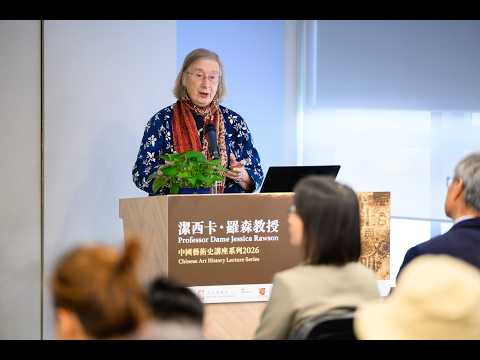
Chinese and Eurasian cultures diverged in their prized materials, and Rawson traces that split through jade in the east and gold in the west. She begins with early metallurgy around the Black Sea and the Liangzhu culture's jade cong, arguing that thick loess hid copper ores in northern China. Rice and millet cooking with ceramic vessels stands against western wheat, barley and oven baking. Shang weapons copied Siberian models, while northern nomads brought gold belts, daggers and horse management. Later cases include Sasanian silver behind Chinese white porcelain, Buddhist mountain inscriptions, and questions on Mughal jade and Sanxingdui gold.
Your comment is kept while you sign up.Sign in
Reads nephrite jade and steppe gold as markers of two Eurasian worlds, from Liangzhu cong to Sasanian silver.
Chinese and Eurasian cultures diverged in their prized materials, and Rawson traces that split through jade in the east and gold in the west. She begins with early metallurgy around the Black Sea and the Liangzhu culture's jade cong, arguing that thick loess hid copper ores in northern China. Rice and millet cooking with ceramic vessels stands against western wheat, barley and oven baking. Shang weapons copied Siberian models, while northern nomads brought gold belts, daggers and horse management. Later cases include Sasanian silver behind Chinese white porcelain, Buddhist mountain inscriptions, and questions on Mughal jade and Sanxingdui gold.
The Lost World of Old Europe, the Danube Valley 5000-3500 BC
Bronze weapons and tools from Panlongcheng and the Seima-Turbino transcultural phenomenon
Interweaving Worlds
The He Zun: From Political Intermediary to National Treasure
The Story of the He Zun: From Political Intermediary to National Treasure
Ingestion and Food Technologies: Maintaining Differences over the Long-term in West, South and East Asia
This lecture
Lecture 2 of 3 of Chinese Art History Lecture Series: The Loess and China.
Choose a node to see how it connects to this lecture. What comes before is on the leftat the top. What comes after is on the rightat the bottom. The ring is what it teaches. People and places are above. Other lectures and books are below.
Press a chosen node again to open it.


