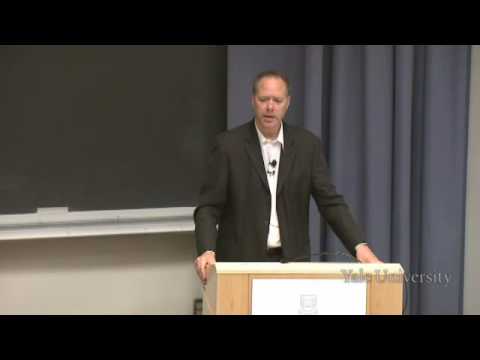
Opening Kant's Epistemology (A History of Philosophy, Lecture 52)
Kant's Epistemology (A History of Philosophy, Lecture 52)
- Length
- 1 h 3 min
- Level
- Undergraduate
- Recorded
- Wheaton College2015
Opening Kant's Epistemology (A History of Philosophy, Lecture 52)
Chapter 1 of 9: Before the lecture
Holmes reads Kant's Critique of Pure Reason as raw sensation given form by space, time and the categories.
Immanuel Kant builds an epistemology upon the distinction between the transcendental aesthetic, which concerns sense perception, and the transcendental analytic, which concerns understanding. Perception requires both raw, unprocessed sensory stimuli as matter and the mental forms of space and time as form. These a priori categories provide universal and necessary structures that allow the mind to organize atomistic sensory input into unified experience. Consequently, human knowledge is restricted to the phenomenal world of experience rather than the noumenal world of things in themselves. This active contribution of the mind transforms the philosophical tradition and establishes the foundation for a priori synthetic judgments.
Immanuel Kant builds an epistemology upon the distinction between the transcendental aesthetic, which concerns sense perception, and the transcendental analytic, which concerns understanding. Perception requires both raw, unprocessed sensory stimuli as matter and the mental forms of space and time as form. These a priori categories provide universal and necessary structures that allow the mind to organize atomistic sensory input into unified experience. Consequently, human knowledge is restricted to the phenomenal world of experience rather than the noumenal world of things in themselves. This active contribution of the mind transforms the philosophical tradition and establishes the foundation for a priori synthetic judgments.
Critique of Pure Reason
The Philosophy of Mathematics

This lecture
Lecture 52 of 81 of A History of Western Philosophy.
Choose a node to see how it connects to this lecture. What comes before is on the leftat the top. What comes after is on the rightat the bottom. The ring is what it teaches. People and places are above. Other lectures and books are below.
Press a chosen node again to open it.
Your comment is kept while you sign up.Sign in