
Marx's Capital: Volume 1 — Critical Political Economy
Close textual and theoretical seminar on Karl Marx's Capital, Volume 1, analyzing the commodity form, theories of value and surplus labor, primitive accumulation, and classical political economy.
Syllabus
18Introduction, Capital Chapter 1: The Commodity
This introductory lecture establishes the analytical framework for a critical study of Karl Marx's Capital, Volume 1, examining the foundational concept of the commodity and its role in capitalist social relations.
Capital Chapter 1: The Commodity, Part 2
This lecture continues the analysis of Marx's Chapter 1, investigating the concept of value and its inherent ambiguities within the framework of commodity production. It explores how value is conceptualized in a capitalist economy.
Capital Chapter 1: The Commodity, Part 3
The third part on Chapter 1 examines the genesis of value through exchange and the specific nature of labor within the capital system. It introduces simple forms of value and their implications.
Capital Chapters 2-4: Exchange, Money, Capital
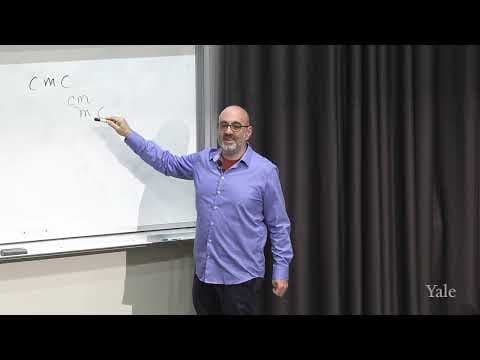
This lecture explores the transition from commodity to money, addressing the phenomenon of commodity fetishism. It analyzes how money emerges as a universal equivalent within capitalist exchange.
Capital Chapters 2-4: Exchange, Money, Capital, Part 2
Continuing the discussion on money and capital, this session investigates the dynamic process of circulation and its transformative impact on the economic system. It clarifies the role of money in capital accumulation.
Capital Chapters 5-9: Absolute Surplus-Value, Valorization, the Working Day
This lecture introduces the general formula of capital and examines its constant movement, setting the stage for understanding the generation of surplus-value. It elucidates the foundational principles of valorization.
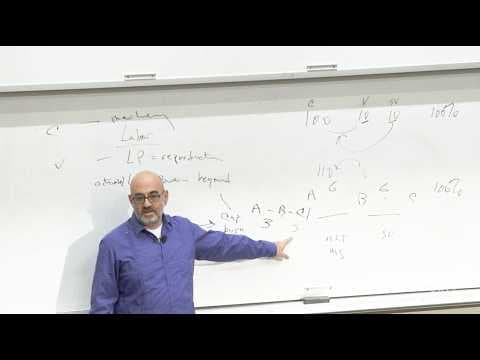
Capital Chapters 5-9: Absolute Surplus-Value, Valorization, the Working Day, Part 2
This session deepens the analysis of production, exploring the concepts of valorization and surplus-value from the standpoint of the labor process. It clarifies how new value is created and appropriated.
Capital Chapter 8: The Working Day
Focusing on Marx's Chapter 8, this lecture scrutinizes the political and economic struggles over the length of the working day and its direct impact on absolute surplus-value. It unpacks the determination of labor time.
Capital Chapters 10-13: Relative Surplus-Value, Division of Labor, Machinery, Part 1
This session marks a pivotal point, introducing the concept of relative surplus-value and its fundamental role in intensifying exploitation. It begins to explore the division of labor and its implications for production.
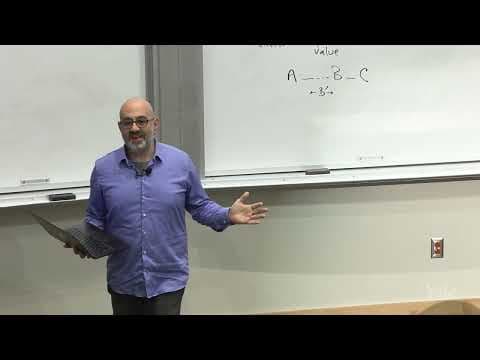
Capital Chapters 10-13: Relative Surplus-Value, Division of Labor, Machinery, Part 2
Continuing the exploration of relative surplus-value, this lecture examines the critical role of technology and machinery in transforming the mode of labor. It elucidates how increased productivity can lead to reduced compensation.
Capital Chapter 12 & 13: Changes in the Division of Labor, Machinery
This lecture investigates the profound changes wrought by the division of labor and new forms of cooperation within the production process. It analyzes how these structural shifts impact both labor and social life.
Capital Chapter 13: Machinery
Devoted entirely to Marx's Chapter 13, this lecture meticulously analyzes the specific functions and consequences of machinery within capitalist production. It details how machinery transforms the labor process and worker experience.
Capital Chapters 14-16: Absolute and Relative Surplus-Value
This lecture examines the intricate interplay and conditioning between absolute and relative surplus-value. It introduces Marx's three types of subsumption of labor under capital, offering a nuanced understanding of exploitation.
Capital Chapter 15: Increase and Decrease in LP and SV & Chapters 17-20: Wages
This session investigates the limits of productivity for generating surplus-value and presents methods for calculating the rate of exploitation. It then transitions to a detailed analysis of the nature and function of wages.
Capital Chapters 17-20: Wages; Chapters 21-24: Accumulation, Reproduction
This lecture uncovers the deceptive forms of the wage and its ideological role. It then shifts to analyze the process of capital accumulation and the concept of simple reproduction within the capitalist system.
Capital Chapters 21-24: Accumulation, Reproduction
Building on prior discussions, this session elaborates on expanded reproduction, explaining how value continuously valorizes and transforms into capital. It details the mechanisms of growth in a capitalist economy.
Capital Chapter 23, The General Law of Capital Accumulation
This lecture focuses on Marx's Chapter 23, investigating whether capital accumulation follows a distinct law. It articulates the general law of capital accumulation and its implications for societal development.
Capital Chapter 24, So-Called Original Accumulation
The final lecture of the series traces the historical origins and violent processes of so-called 'original accumulation' that enabled the rise of the capitalist system. It discusses the revolutionary nature of Marx's Volume 1.