Lecture 1: Introduction, Capital Chapter 1: The Commodity (LIT-CAP1)
57:27Lecture 2: Capital Chapter 1: The Commodity, Part 2 (LIT-CAP1)
56:25Lecture 3: Capital Chapter 1: The Commodity, Part 3 (LIT-CAP1)
50:05Lecture 4: Capital Chapters 2-4: Exchange, Money, Capital (LIT-CAP1)
49:48Lecture 5: Capital Chapters 2-4: Exchange, Money, Capital, Part 2 (LIT-CAP1)
50:07Lecture 6: Capital Chapters 5-9: Absolute Surplus-Value, Valorization, the Working Day (LIT-CAP1)
45:20Lecture 7: Capital Chapters 5-9: Absolute Surplus-Value, Valorization, the Working Day, Part 2 (LIT-CAP1)
49:59Lecture 8: Capital Chapter 8: The Working Day (LIT-CAP1)
39:57Lecture 9: Capital Chapters 10-13: Relative Surplus-Value, Division of Labor, Machinery, Part 1 (LIT-CAP1)
50:20Lecture 10: Capital Chapters 10-13: Relative Surplus-Value, Division of Labor, Machinery, Part 2 (LIT-CAP1)
49:24Lecture 11: Capital Chapter 12 & 13: Changes in the Division of Labor, Machinery (LIT-CAP1)
45:51Lecture 12: Capital Chapter 13: Machinery (LIT-CAP1)
47:28Lecture 13: Capital Chapters 14-16: Absolute and Relative Surplus-Value (LIT-CAP1)
47:41Lecture 14: Capital Chapter 15: Increase and Decrease in LP and SV & Chapters 17-20: Wages (LIT-CAP1)
51:03Lecture 15: Capital Chapters 17-20: Wages; Chapters 21-24: Accumulation, Reproduction (LIT-CAP1)
50:59Lecture 16: Capital Chapters 21-24: Accumulation, Reproduction (LIT-CAP1)
51:49Lecture 17: Capital Chapter 23, The General Law of Capital Accumulation (LIT-CAP1)
47:42Lecture 18: Capital Chapter 24, So-Called Original Accumulation (LIT-CAP1)
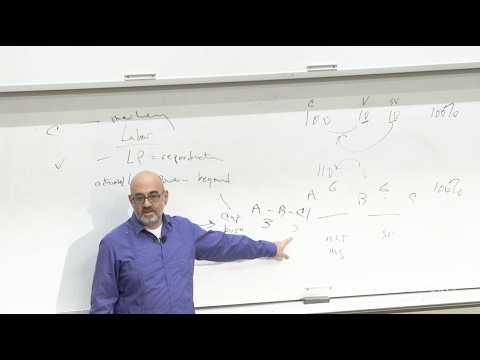
48:02Lecture 7: Capital Chapters 5-9: Absolute Surplus-Value, Valorization, the Working Day, Part 2 (LIT-CAP1)

This session deepens the analysis of production, exploring the concepts of valorization and surplus-value from the standpoint of the labor process. It clarifies how new value is created and appropriated.
How does the world look from the standpoint of production? What is valorization? What is surplus-value?
A chapter by chapter study of Marx’s powerful analysis in Capital: Critique of Political Economy, Volume 1. This book from 1872 is still the best guide to the predatory economic and social system within which we live. The book solves five basic mysteries in our social world. The mysteries are: why social classes struggle against one another, why human beings are in the thrall of things, how a quantity of money turns into more money without seeming to add anything, why some people are forced to work and the more they work the less they make proportional to their effort, and finally, and why it is so hard to transform the system for the better.
Lecture 6: Capital Chapters 5-9: Absolute Surplus-Value, Valorization, the Working Day (LIT-CAP1)
Next · Lecture 8Lecture 8: Capital Chapter 8: The Working Day (LIT-CAP1)