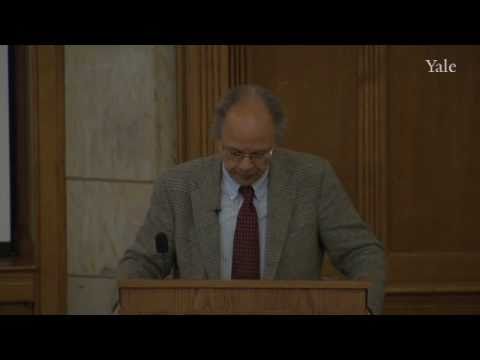
Frank M. Snowden
Professor · Yale University
Frank M. Snowden is Andrew Downey Orrick Professor Emeritus of History and the History of Medicine at Yale, author of The Conquest of Malaria: Italy, 1900-1962.
- lectures
- 24
- series
- 1
- hours
- 19
Start here


Series and courses
Yale HSHM 202: Epidemics in Western Society Since 1600
Open the course
- 1Introduction to the Course
- 2Classical Views of Disease: Hippocrates, Galen, and Humoralism
- 3Plague (I): Pestilence as Disease
- 4Plague (II): Responses and Measures
Show 20 moreShow fewer
- 5Plague (III): Illustrations and Conclusions
- 6Smallpox (I): 'The Speckled Monster'
- 7Smallpox (II): Jenner, Vaccination, and Eradication
- 8Nineteenth-Century Medicine: The Paris School of Medicine
- 9Asiatic Cholera (I): Personal Reflections
- 10Asiatic Cholera (II): Five Pandemics
- 11The Sanitary Movement and the 'Filth Theory of Disease'
- 12Syphilis: From the "Great Pox" to the Modern Version
- 13Contagionism versus Anticontagionsim
- 14The Germ Theory of Disease
- 15Tropical Medicine as a Discipline
- 16Malaria (I): The Case of Italy
- 17Malaria (II): The Global Challenge
- 18Tuberculosis (I): The Era of Consumption
- 19Tuberculosis (II): After Robert Koch
- 20Pandemic Influenza
- 21The Tuskegee Experiment
- 22AIDS (I)
- 24Poliomyelitis: Problems of Eradication (Epidemics in Western Society Since 1600, Lecture 24)
- 25SARS, Avian Influenza, and Swine Flu: Lessons and Prospects (Epidemics in Western Society Since 1600, Lecture 25)
In these lectures
- Tuberculosis operates as both an endemic condition and a slow-moving epidemic over long historical timeframes.Tuberculosis (I): The Era of Consumption
- The sanitary movement emerged in 1830s and '40s Britain as a response to urbanization and infectious diseases like cholera, focusing on the removal of filth.The Sanitary Movement and the 'Filth Theory of Disease'
- Smallpox is a viral disease caused by orthopox viruses rather than bacteria.Smallpox (I): 'The Speckled Monster'
Draws on
People cited in the lectures, at the moment of the citation.
- Robert KochDiscovered the tubercle bacillus in 1882.
- Edward JennerAssociated with the development of vaccination.
- Louis Pasteur19th-century scientist known for germ theory.
- Girolamo Fracastoro16th-century Italian physician who popularized contagionism
- Ronald RossCollaborated with Patrick Manson to demonstrate avian malaria transmission in India.
- Rudolf VirchowPrussian physician (1821-1902), cited as a proponent of social medicine and alternative public health.
Playlists
2


About
Frank M. Snowden is Andrew Downey Orrick Professor Emeritus of History and the History of Medicine at Yale, author of The Conquest of Malaria: Italy, 1900-1962. His undergraduate course HSHM 202 runs from Galenic humoralism and Chadwick's 1842 sanitary report to tuberculosis, malaria, AIDS and the Tuskegee study.
Taught with
Same subject, Medicine & Health
Connections
28Their places, courses, books and lectures.
Institutions2
Concept1
Lectures24
- Tuberculosis (I): The Era of Consumption
- The Sanitary Movement and the 'Filth Theory of Disease'
- Smallpox (I): 'The Speckled Monster'
- Tuberculosis (II): After Robert Koch
- The Tuskegee Experiment
- Plague (III): Illustrations and Conclusions
Show 18 moreShow fewer
- Classical Views of Disease: Hippocrates, Galen, and Humoralism
- Contagionism versus Anticontagionsim
- Nineteenth-Century Medicine: The Paris School of Medicine
- Syphilis: From the "Great Pox" to the Modern Version
- Malaria (II): The Global Challenge
- AIDS (I)
- Malaria (I): The Case of Italy
- Pandemic Influenza
- Plague (I): Pestilence as Disease
- Smallpox (II): Jenner, Vaccination, and Eradication
- Asiatic Cholera (I): Personal Reflections
- The Germ Theory of Disease
- Asiatic Cholera (II): Five Pandemics
- Introduction to the Course
- Poliomyelitis: Problems of Eradication (Epidemics in Western Society Since 1600, Lecture 24)
- Plague (II): Responses and Measures
- Tropical Medicine as a Discipline
- SARS, Avian Influenza, and Swine Flu: Lessons and Prospects (Epidemics in Western Society Since 1600, Lecture 25)