Opening A History of Philosophy: George Berkeley's Idealism
A History of Philosophy: George Berkeley's Idealism
- Length
- 1 h
- Level
- Undergraduate
- Recorded
- Wheaton College2015
Opening A History of Philosophy: George Berkeley's Idealism
Chapter 1 of 7: Introduction to George Berkeley and idealism
Holmes shows Berkeley turning Locke's own empiricism against materialism, ending in a causal argument for God.
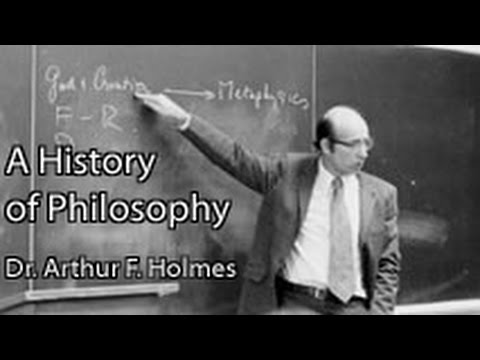
George Berkeley's metaphysical idealism posits that matter does not exist and all reality consists of minds and their ideas. Arthur F. Holmes traces this philosophical project by examining Berkeley's critique of John Locke's epistemology and his rejection of abstract ideas. The lecture explains how Berkeley builds a mentalist framework by denying objective primary and secondary qualities, arguing that physical objects depend entirely on being perceived. Finally, the discussion outlines Berkeley's causal arguments for the existence of God as the ultimate source of all perceptual experiences.
George Berkeley's metaphysical idealism posits that matter does not exist and all reality consists of minds and their ideas. Arthur F. Holmes traces this philosophical project by examining Berkeley's critique of John Locke's epistemology and his rejection of abstract ideas. The lecture explains how Berkeley builds a mentalist framework by denying objective primary and secondary qualities, arguing that physical objects depend entirely on being perceived. Finally, the discussion outlines Berkeley's causal arguments for the existence of God as the ultimate source of all perceptual experiences.
The Unconscious Origins of Berkeley's Philosophy

This lecture
Lecture 44 of 81 of A History of Western Philosophy.
Choose a node to see how it connects to this lecture. What comes before is on the leftat the top. What comes after is on the rightat the bottom. The ring is what it teaches. People and places are above. Other lectures and books are below.
Press a chosen node again to open it.
Your comment is kept while you sign up.Sign in