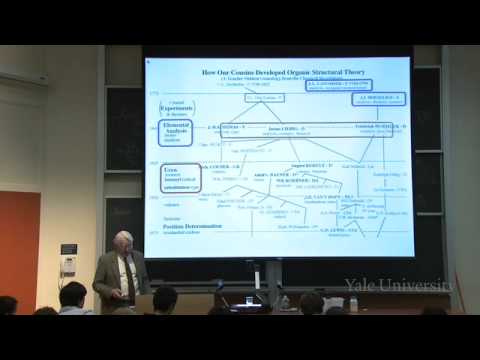
Berzelius to Liebig and Wöhler (1805-1832)

This lecture traces key developments from Berzelius's elemental discoveries and combustion analysis to the dualism theory of electrostatic attraction. It highlights Wöhler's synthesis of urea revealing isomerism and the collaborative work of Wöhler and Liebig on oil of bitter almonds, extending dualism into organic chemistry through radical theory.
Freshman Organic Chemistry (CHEM 125)
Source: YaleCourses via YouTubeWatch on YouTube
Previous · Lecture 20
Rise of the Atomic Theory (1790-1805)
Next · Lecture 22Radical and Type Theories (1832-1850)
Comments
Add a comment...Sign in