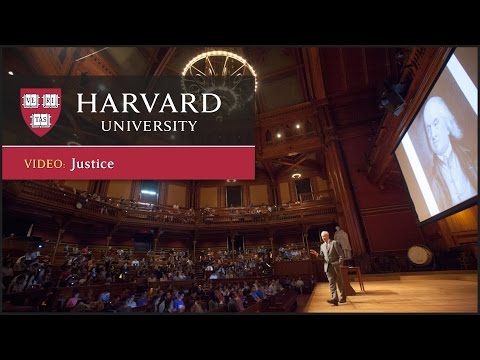
Justice: The Moral Side of Murder & Cannibalism
54:56Harvard Justice #02: Putting a Price Tag on Life — Cost-Benefit Analysis & John Stuart Mill
55:10Harvard Justice #03: Free to Choose — Robert Nozick, Self-Ownership & The Minimal State
55:08Harvard Justice #04: This Land Is My Land — John Locke on Natural Rights, Labor & Consent
54:58Justice: What's The Right Thing To Do? Episode 05: "HIRED GUNS"
55:10Harvard Justice #06: Mind Your Motive — Immanuel Kant's Groundwork & Categorical Imperative
55:13Justice: What's The Right Thing To Do? Episode 07: "A LESSON IN LYING"
55:04Justice: What's The Right Thing To Do? Episode 08: "WHATS A FAIR START?"
55:07Lecture 9: Arguing Affirmative Action (ER22)
55:01Lecture 10: The Good Citizen (ER22)
55:08Lecture 11: The Claims of Community (ER22)
55:11Lecture 12: Debating Same-Sex Marriage (ER22)
55:11The Public Philosopher: Healthcare, Welfare, and the American Dream (ER22)
1:19:19Lecture 9: Arguing Affirmative Action (ER22)

This lecture examines affirmative action through the 1996 Cheryl Hopwood court case, debating whether race should be considered to correct educational inequalities or compensate for historical injustices. Students discuss the ethical merits and challenges of such policies.
To register for the 2015 course, visit https://www.edx.org/course/justice-harvardx-er22-1x-0.
PART ONE: ARGUING AFFIRMATIVE ACTION
PART TWO: WHAT'S THE PURPOSE?
Justice: What's The Right Thing To Do? Episode 08: "WHATS A FAIR START?"
Next · Lecture 10Lecture 10: The Good Citizen (ER22)
Seminar notes & discussion
No public seminar notes on this lecture yet.