/
lectern.tv
Play15s30s1x0:00/--:--
DoneWatched
Expand
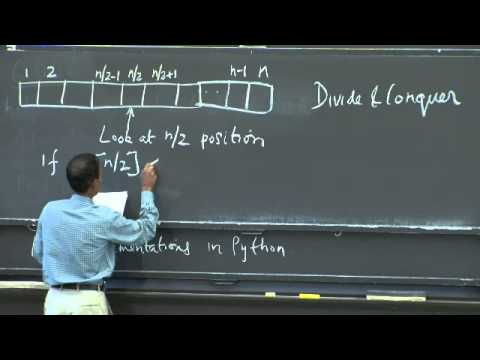
Shows why plausible-looking O(n) 2D divide-and-conquer algorithms can fail correctness—and how proving an invariant rescues both correctness and O(n log n) runtime.
Lecture guide · Written by AI from the lecture. For the lecture’s own words, open the Transcript tab.
Opening lecture of 22-session syllabus
Models of Computation, Random Access Machine & Document Distance
Edwin Sibley Webster Professor of Electrical Engineering and Computer Science, MIT
Edwin Sibley Webster Professor of EECS at MIT, IEEE/ACM Fellow, and co-instructor of MIT 6.006 and 6.046J algorithms courses.
This course deepens the understanding of algorithm design and analysis, moving beyond introductory concepts to advanced techniques like dynamic programming, amortized analysis, and network flow algorithms.
A solid understanding of algorithms, including sorting, searching, and graph traversal, is fundamental for designing and analyzing the performance and consistency of distributed algorithms and protocols.
Cryptography relies heavily on algorithmic principles, including number theory algorithms, complexity theory, and data structures for efficient key generation, encryption, and digital signature schemes.