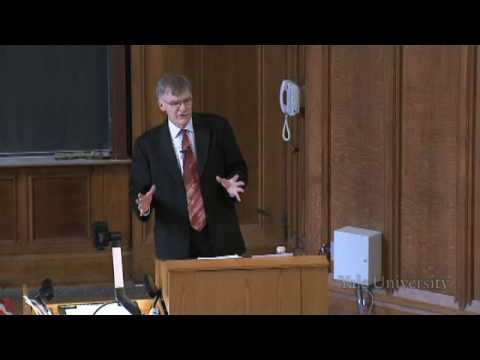
Opening Race and Reunion: The Civil War in American Memory (HIST 119, Lecture 26)
Race and Reunion: The Civil War in American Memory (HIST 119, Lecture 26)
- Length
- 52 min
- Level
- Undergraduate
- Recorded
- Yale University2008
Opening Race and Reunion: The Civil War in American Memory (HIST 119, Lecture 26)
Chapter 1 of 7: Historical memory and the Centennial
Reconstruction ended through national electoral politics as much as through violence and the courts, Blight argues in session 26 of Yale's HIST 119. He opens with the 1876 Centennial Exposition in Philadelphia, whose industrial displays masked economic depression and racial strife. The 1874 off-year elections, a referendum on Reconstruction after the Panic of 1873, handed Democrats the House. Newspapers such as the Springfield Republican show northern sympathy for freedmen fading even as Republicans waved the bloody shirt. The Tilden–Hayes contest then turns on disputed southern returns and the Wormley Hotel bargain, which traded the presidency for southern home rule and federal railroad subsidies.
Your comment is kept while you sign up.Sign in
Follows the disputed 1876 electoral count from an eight-to-seven commission vote to the Wormley Hotel deal.
Reconstruction ended through national electoral politics as much as through violence and the courts, Blight argues in session 26 of Yale's HIST 119. He opens with the 1876 Centennial Exposition in Philadelphia, whose industrial displays masked economic depression and racial strife. The 1874 off-year elections, a referendum on Reconstruction after the Panic of 1873, handed Democrats the House. Newspapers such as the Springfield Republican show northern sympathy for freedmen fading even as Republicans waved the bloody shirt. The Tilden–Hayes contest then turns on disputed southern returns and the Wormley Hotel bargain, which traded the presidency for southern home rule and federal railroad subsidies.
The Hamlet
The New York Evening Post
Springfield Republican
The New York Times
64 and 65 Civil Rights Acts
Nick Lemann's book
This lecture
Lecture 26 of 27 of The Civil War and Reconstruction Era, 1845–1877.
Choose a node to see how it connects to this lecture. What comes before is on the leftat the top. What comes after is on the rightat the bottom. The ring is what it teaches. People and places are above. Other lectures and books are below.
Press a chosen node again to open it.