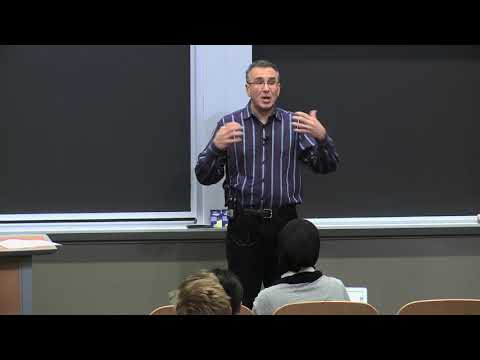
Opening Social Insurance
Social Insurance
- Length
- 49 min
- Level
- Undergraduate
- Recorded
- MIT2025
Opening Social Insurance
Chapter 1 of 6: Before the lecture
Gruber derives the economics of social insurance, analyzing adverse selection and moral hazard.
Social insurance provides financial protection against economic risks, yet faces severe market failures due to asymmetric information. Gruber demonstrates how adverse selection can collapse insurance markets when only high-risk individuals buy coverage. Governments intervene through subsidies, mandates, or direct provision to restore market efficiency. However, these programs encounter the fundamental social insurance tradeoff caused by moral hazard, where insurance alters behavior and reduces labor supply. The lecture examines this tradeoff through workers' compensation and Social Security, concluding with the impact of actuarial adjustments on retirement decisions.
Social insurance provides financial protection against economic risks, yet faces severe market failures due to asymmetric information. Gruber demonstrates how adverse selection can collapse insurance markets when only high-risk individuals buy coverage. Governments intervene through subsidies, mandates, or direct provision to restore market efficiency. However, these programs encounter the fundamental social insurance tradeoff caused by moral hazard, where insurance alters behavior and reduces labor supply. The lecture examines this tradeoff through workers' compensation and Social Security, concluding with the impact of actuarial adjustments on retirement decisions.
This lecture
Lecture 21 of 26 of Principles of Microeconomics.
Choose a node to see how it connects to this lecture. What comes before is on the leftat the top. What comes after is on the rightat the bottom. The ring is what it teaches. People and places are above. Other lectures and books are below.
Press a chosen node again to open it.
Your comment is kept while you sign up.Sign in