
Opening The Collapse of Communism and Global Challenges
The Collapse of Communism and Global Challenges
- Length
- 41 min
- Level
- Undergraduate
- Recorded
- Yale University2009
Opening The Collapse of Communism and Global Challenges
Chapter 1 of 6: Before the lecture
European civilization between the collapse of communism and global challenges spans the disintegration of the Soviet Union, the resurgence of ethnic nationalism, and debates over human rights. The Soviet system collapsed due to economic failure, widespread scarcity, and nationalist movements in states like Poland and Hungary. Mikhail Gorbachev introduced glasnost and perestroika, renouncing military intervention through the Brezhnev Doctrine. This accelerated political change, yielding the peaceful Velvet Revolution and violent ethnic cleansing in the Balkans. Later sections address post-communist migration, economic globalization, xenophobic right-wing politics, and changing European views of American human rights standards.
Your comment is kept while you sign up.Sign in
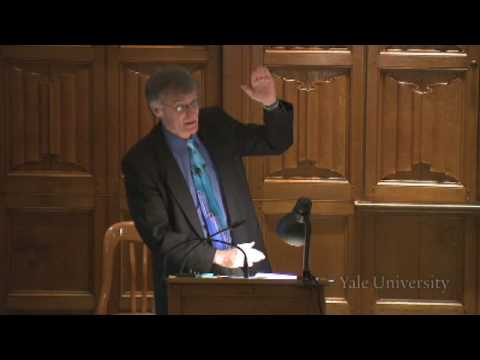
Traces the Soviet empire's disintegration through Gorbachev's reforms and the Velvet Revolutions.
European civilization between the collapse of communism and global challenges spans the disintegration of the Soviet Union, the resurgence of ethnic nationalism, and debates over human rights. The Soviet system collapsed due to economic failure, widespread scarcity, and nationalist movements in states like Poland and Hungary. Mikhail Gorbachev introduced glasnost and perestroika, renouncing military intervention through the Brezhnev Doctrine. This accelerated political change, yielding the peaceful Velvet Revolution and violent ethnic cleansing in the Balkans. Later sections address post-communist migration, economic globalization, xenophobic right-wing politics, and changing European views of American human rights standards.
This lecture
Lecture 24 of 24 of European Civilization, 1648–1945.
Choose a node to see how it connects to this lecture. What comes before is on the leftat the top. The ring is what it teaches. People and places are above. Other lectures and books are below.
Press a chosen node again to open it.


