Neuroscience & Cognition: From Sensory Perception to Collective Intelligence
This study path begins with the foundational principles of sensory perception and behavioral biology, establishing how the brain processes information and generates responses. It then progresses to advanced concepts of neural computation and collective intelligence, examining how complex cognitive functions emerge from interacting neural circuits and beyond.
Explore the neural mechanisms underlying perception, memory, and complex behavior, culminating in theories of collective intelligence.
6steps7htotal runtime
Step 1 of 6
Path progress0 of 6 watched
Curriculum sequence
6
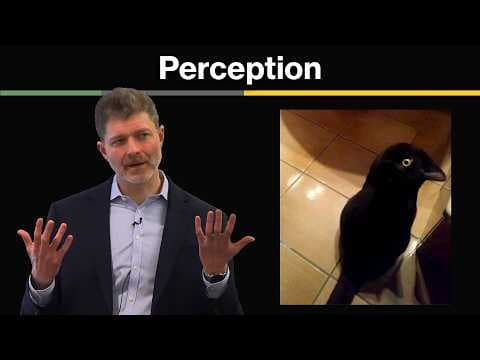
Introduction to Perception
This lecture provides a foundational introduction to the field of sensation and perception, establishing the basic concepts and organizational framework for understanding how the brain processes sensory information.
Frequency Selectivity and Nonlinearity in Hearing
Building on the general introduction to perception, this lecture delves into the specific mechanical and neural mechanisms of auditory processing, illustrating how sensory stimuli are transduced into neural signals.
Neurobiology of Musical Perception, Pitch & Auditory Cortex
Expanding on sensory processing, this lecture explores the specialized neural organization for complex auditory perception, specifically music, demonstrating how the brain interprets intricate sensory patterns.

Introduction to Human Behavioral Biology
Transitioning from sensory processing to broader behavioral contexts, this lecture introduces an interdisciplinary framework for understanding human behavior, integrating biological and environmental factors.
Theory of Mind & Mentalizing
Following the overview of human behavioral biology, this lecture focuses on a key social cognitive function, 'Theory of Mind,' illustrating how specialized brain regions enable complex social understanding.
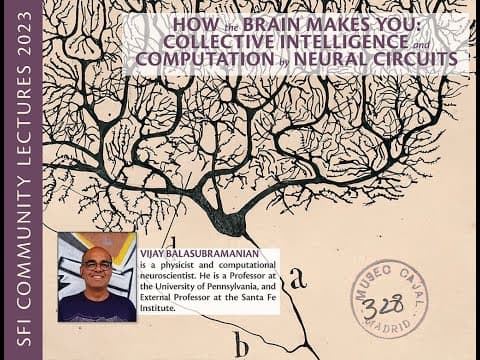

How the Brain Makes You: Collective Intelligence and Computation by Neural Circuits
Building on individual cognitive functions, this lecture explores how the collective computational activity of neural circuits gives rise to consciousness and intelligence, bridging individual mechanisms to emergent properties.
Companion reading for this sequence
2Amazon Associate

Lecturer's Course TextMcGraw-Hill Medical · 6th Edition (2021)
Principles of Neural Science
By Eric R. Kandel, John D. Koester, Sarah H. Mack et al.
Nobel Laureate Eric Kandel's benchmark reference on cortical specialization, visual and auditory perception, synaptic plasticity, and cognitive neuroscience.
Written by Nancy Kanwisher for 9.13 · Matches 4 steps in pathISBN 978-1259642234
View on Amazon
Lecturer's Course TextPenguin Books · Reprint Edition (2018)
Behave: The Biology of Humans at Our Best and Worst
By Robert M. Sapolsky
The direct print distillation of Robert Sapolsky's Stanford Human Behavioral Biology course—tracing behavior from one second before an action back to evolutionary time.
Written by Robert Sapolsky for BIO 150ISBN 978-0143110910
View on Amazon