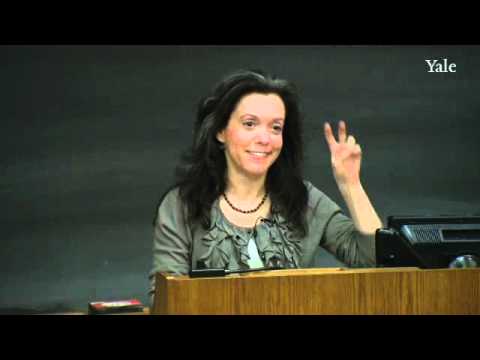
Joanne B. Freeman
Class of 1954 Professor of History and American Studies · Yale University · author of Affairs of Honor
Joanne B. Freeman is the Class of 1954 Professor of History and American Studies at Yale University, a historian of early American political culture.
- lectures
- 25
- series
- 1
- hours
- 18
Start here


Series and courses
Yale HIST 116: The American Revolution
Open the course
- 1Introduction: Freeman's Top Five Tips for Studying the Revolution
- 2Being a British Colonist
- 3Being a British American
- 4"Ever at Variance and Foolishly Jealous": Intercolonial Relations
Show 21 moreShow fewer
- 5Outraged Colonials: The Stamp Act Crisis
- 6Resistance or Rebellion? (Or, What the Heck is Happening in Boston?)
- 7Being a Revolutionary
- 8The Logic of Resistance
- 9Who Were the Loyalists?
- 10Common Sense
- 11Independence
- 12Civil War
- 13Organizing a War
- 14Heroes and Villains
- 15Citizens and Choices: Experiencing the Revolution in New Haven
- 16The Importance of George Washington
- 17The Logic of a Campaign (or, How in the World Did We Win?)
- 18Fighting the Revolution: The Big Picture
- 19War and Society
- 20Confederation
- 21A Union Without Power
- 22The Road to a Constitutional Convention
- 23Creating a Constitution
- 24Creating a Nation: Debates on the Ratification of the US Constitution
- 25Being an American: The Legacy of the Revolution
In these lectures
- The American Revolution was fundamentally a shift in mindset and popular ideology that spanned decades, rather than just a military war.Introduction: Freeman's Top Five Tips for Studying the Revolution
- Thomas Paine's Common Sense sold over 120,000 copies in its first few months, making it an unprecedented colonial bestseller.Common Sense
- White male land ownership reached roughly 60% in the American colonies, far exceeding European rates.Being a British Colonist
Draws on
People cited in the lectures, at the moment of the citation.
- George WashingtonDiscussed in relation to British officials' accounts.
- John AdamsCited as a brilliant, blunt commentator with a sense of humor whose letters are frequently referenced.
- Thomas JeffersonAuthor of an 1816 letter discussing democracy and representative government.
- James MadisonStudied governments across history to prepare for the Constitutional Convention.
- Alexander HamiltonAuthor of a letter regarding democracy prior to his duel with Aaron Burr.
- Benjamin FranklinMet Paine in London and wrote a letter of recommendation for him.
Playlists
1


About
Joanne B. Freeman is the Class of 1954 Professor of History and American Studies at Yale University, a historian of early American political culture. Her undergraduate course HIST 116 traces the Revolution from the Stamp Act crisis and Paine's Common Sense to Washington's resignation.
Taught with
Same subject, History
Connections
30Their places, courses, books and lectures.
Institutions2
Book1
Concept1
Lectures25
- Introduction: Freeman's Top Five Tips for Studying the Revolution
- Common Sense
- Being a British Colonist
- The Importance of George Washington
- Independence
- Being a British American
Show 19 moreShow fewer
- Fighting the Revolution: The Big Picture
- War and Society
- Outraged Colonials: The Stamp Act Crisis
- Heroes and Villains
- A Union Without Power
- Confederation
- "Ever at Variance and Foolishly Jealous": Intercolonial Relations
- The Logic of Resistance
- Civil War
- Being a Revolutionary
- Who Were the Loyalists?
- Resistance or Rebellion? (Or, What the Heck is Happening in Boston?)
- Citizens and Choices: Experiencing the Revolution in New Haven
- The Logic of a Campaign (or, How in the World Did We Win?)
- Creating a Constitution
- Creating a Nation: Debates on the Ratification of the US Constitution
- The Road to a Constitutional Convention
- Being an American: The Legacy of the Revolution
- Organizing a War