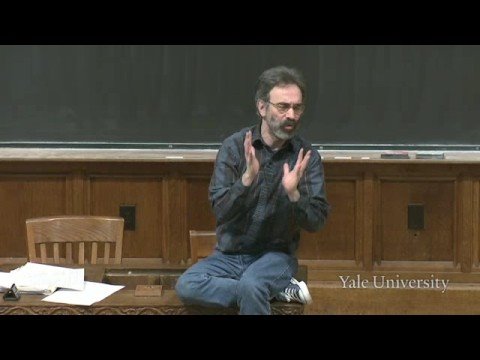
Opening A History of Philosophy: John Dewey
A History of Philosophy: John Dewey
- Length
- 1 h
- Level
- Undergraduate
- Recorded
- Wheaton College2015
Opening A History of Philosophy: John Dewey
Chapter 1 of 8: American pragmatism and William James
Traces John Dewey's instrumentalism from evolutionary naturalism through experimental thinking and value theory.
John Dewey shaped American pragmatism through evolutionary naturalism and instrumentalism. The lecture traces his core concepts, including fluid experience, functionalist psychology, and experimental thinking as a biological tool for problem-solving. Holmes details Dewey's applications across logic, epistemology, value theory, education, and religion. Dewey rejects fixed essences and metaphysical realism, arguing instead that ideas and values are instruments for organismic adjustment to the environment. The discussion concludes with Dewey's religious humanism and his definition of God as a symbol for community ideals.
John Dewey shaped American pragmatism through evolutionary naturalism and instrumentalism. The lecture traces his core concepts, including fluid experience, functionalist psychology, and experimental thinking as a biological tool for problem-solving. Holmes details Dewey's applications across logic, epistemology, value theory, education, and religion. Dewey rejects fixed essences and metaphysical realism, arguing instead that ideas and values are instruments for organismic adjustment to the environment. The discussion concludes with Dewey's religious humanism and his definition of God as a symbol for community ideals.
Radical Empiricism
Language, Truth and Logic
The Will to Believe
The Ethics of Belief
Dewey's Works
Dewey's Works Chapter 3
The Logic of Physics

This lecture
Lecture 65 of 81 of A History of Western Philosophy.
Choose a node to see how it connects to this lecture. What comes before is on the leftat the top. What comes after is on the rightat the bottom. The ring is what it teaches. People and places are above. Other lectures and books are below.
Press a chosen node again to open it.
Your comment is kept while you sign up.Sign in
Logic
How We Think
The Theory of Valuation
Human Nature and Conduct
Situation Ethics
Democracy and Education
A Common Faith
Humanist Manifesto