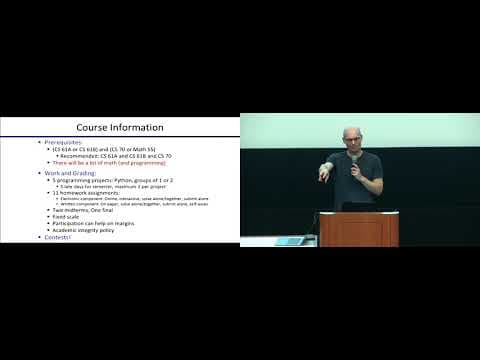

Introduction to Artificial Intelligence
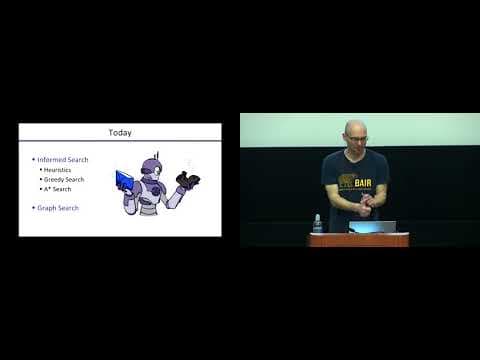
Uninformed and A* heuristic search, constraint satisfaction, adversarial minimax/expectimax games, Markov decision processes, reinforcement learning, Bayes nets, and particle filtering.
Complete university courses recorded at UC Berkeley.
Uninformed and A* heuristic search, constraint satisfaction, adversarial minimax/expectimax games, Markov decision processes, reinforcement learning, Bayes nets, and particle filtering.
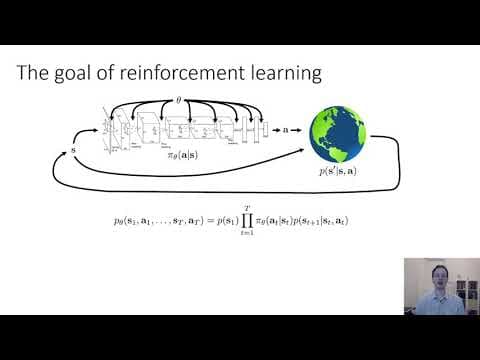
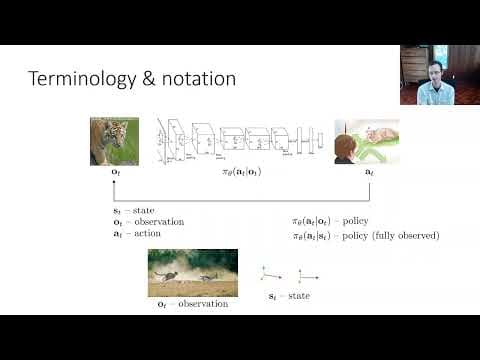
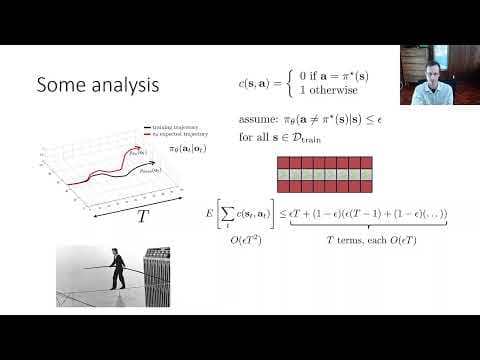
Imitation learning, policy gradients, actor-critic algorithms, value-function Q-learning, model-based RL, offline reinforcement learning, exploration, and inverse RL.
Self-contained seminars, public lectures, and invited talks.
Jennifer Doudna, Nobel laureate and co-discoverer of CRISPR-Cas9, provides a foundational overview of CRISPR biology, tracing its development from fundamental microbial defense mechanisms to a revolutionary genome engineering technology.
Jonathan Weissman details advanced applications of catalytically inactive Cas9 (dCas9) as a versatile tool for precise gene regulation and epigenetic engineering, beyond its traditional role in genome editing.
Distinguishes syntactic symbol manipulation from intrinsic intentionality and subjective phenomenology, defending biological naturalism against strong computationalism.
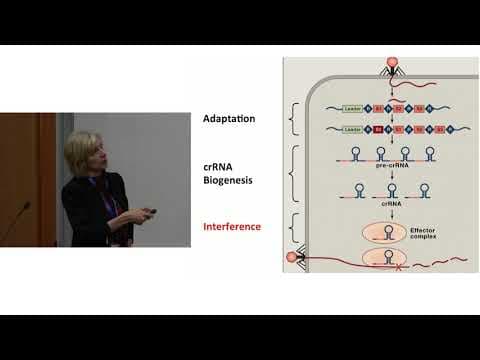
Explains bacterial adaptive immunity and the structural mechanism by which guide RNA directs Cas9 endonuclease cleavage of double-stranded DNA.
Reframes large-scale machine learning around microeconomic mechanism design—where uncertainty quantification interacts with strategic incentives, scarcity, and multi-agent markets.
Dr. Dirk Hockemeyer presents a detailed lecture on the application of CRISPR technology for precise genome editing within human stem cells, elucidating advanced molecular biology techniques.
Protein chemistry, CRISPR/mRNA engineering, natural selection, and fMRI neuroscience
MIT · UC Berkeley · Karolinska Institutet +1
Browse every recorded lecture from UC Berkeley.