Courses
105 multi-lecture university courses with ordered session lists.

Using Big Data to Solve Economic and Social Problems
Applies administrative tax, education, and census datasets to intergenerational mobility, neighborhood effects, innovation, health disparities, and tax policy.

Principles of Microeconomics
Constrained utility maximization, demand elasticity, production functions, competitive equilibrium, welfare theorems, monopoly pricing, oligopoly, externalities, and asymmetric information.
Economic Applications of Game Theory
Formal analysis of strategic interaction in economic environments, developing static and dynamic games of complete and incomplete information, signaling, bargaining, and auction theory.
Public Finance and Public Policy
Microeconomic analysis of government fiscal policy, examining market failures, externalities, public goods, social insurance design, optimal taxation, and empirical policy evaluation.
The Challenge of World Poverty
Nobel laureates Esther Duflo and Abhijit Banerjee analyze poverty traps, randomized controlled trials, nutrition, preventive health, education incentives, microcredit, insurance, and institutional governance.
Topics in Mathematics with Applications in Finance
Linear regression, time-series econometrics, stochastic calculus, Itô's lemma, Black-Scholes option pricing, portfolio optimization, volatility modeling, and risk management.

Simons Institute: Prediction, Incentives & Causal Intervention
Interdisciplinary research sequence at the interface of economics, causal inference, and algorithmic decision-making, studying performative prediction, strategic classification, and mechanism design.

Game Theory
Rigorous undergraduate introduction to strategic reasoning: dominance, Nash equilibrium, backward induction, subgame perfection, evolutionary games, asymmetric information, and auctions.
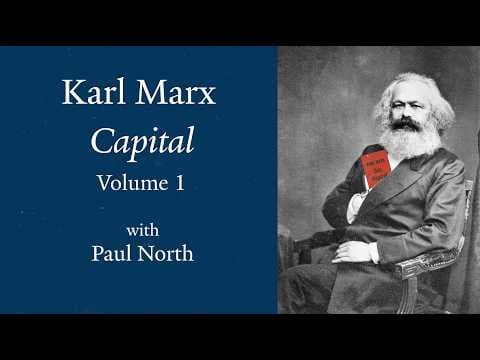
Marx's Capital: Volume 1 — Critical Political Economy
Close textual and theoretical seminar on Karl Marx's Capital, Volume 1, analyzing the commodity form, theories of value and surplus labor, primitive accumulation, and classical political economy.
Principles of Macroeconomics
National income accounting, IS-LM equilibrium, central bank monetary policy, inflation expectations, labor markets, Solow long-run growth, open-economy exchange rates, and financial crises.

Finance Theory I
Andrew Lo's foundational financial economics sequence covering framework of financial analysis, present value relations, yield curves, fixed-income securities, equities, portfolio theory, and market efficiency.
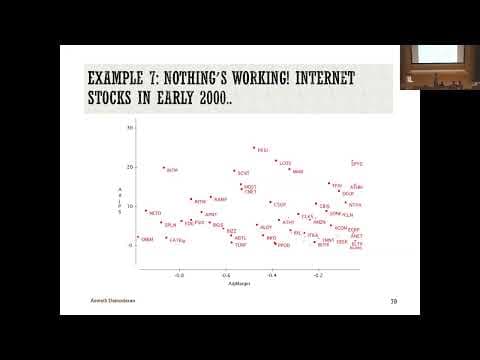

Corporate Valuation
Intrinsic discounted cash flow valuation, equity risk premiums, cost of capital, growth estimation, terminal value, relative multiples, and valuing private and distressed firms.
Financial Markets
Nobel laureate Robert Shiller examines the theory, history, and behavioral foundations of risk management, portfolio diversification, efficient markets, real estate, banking, and regulation.
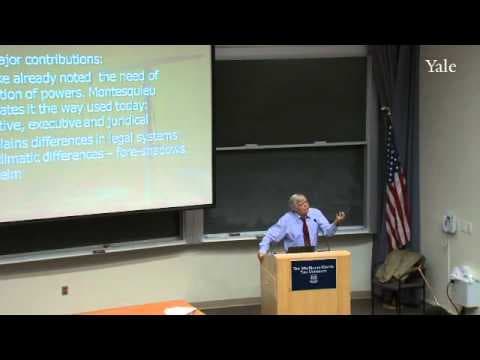
Foundations of Modern Social Theory
Close reading of Hobbes, Locke, Montesquieu, Rousseau, Adam Smith, John Stuart Mill, Karl Marx, Friedrich Nietzsche, Sigmund Freud, Max Weber, and Émile Durkheim.